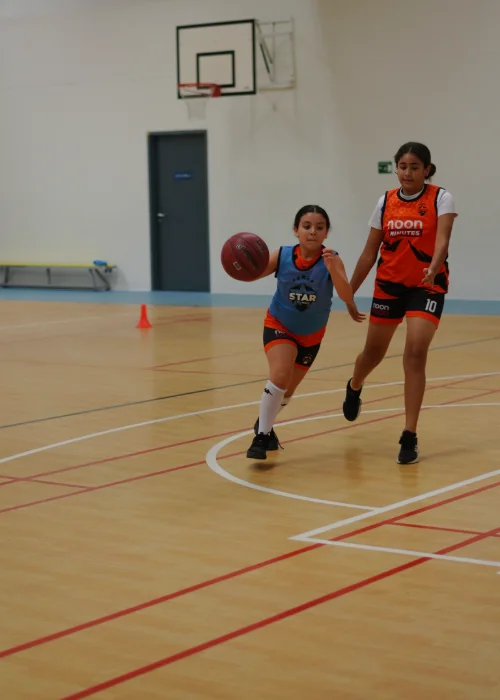
A Court Can Become More Than a Place to Play
A basketball court is marked by fixed lines: baselines, sidelines, the key and the three-point arc. For a young player, however, the meaning of the court is not fixed at all. It can be the place where she takes her first confident dribble, learns to call for the ball, joins a team or discovers that she enjoys competing.

“This is her court” expresses a clear promise of belonging. A girl should not feel that she is borrowing space in somebody else’s sport. She should receive purposeful coaching, meaningful involvement and standards that take her development seriously.
For parents searching for a girls’ basketball academy in Dubai, that distinction matters. A programme is not defined only by access to hoops and a weekly timetable. Its value depends on what happens once girls enter the gym: how coaches teach, how groups are organised, how teammates behave and whether there is a pathway from beginner skills to real game experiences.
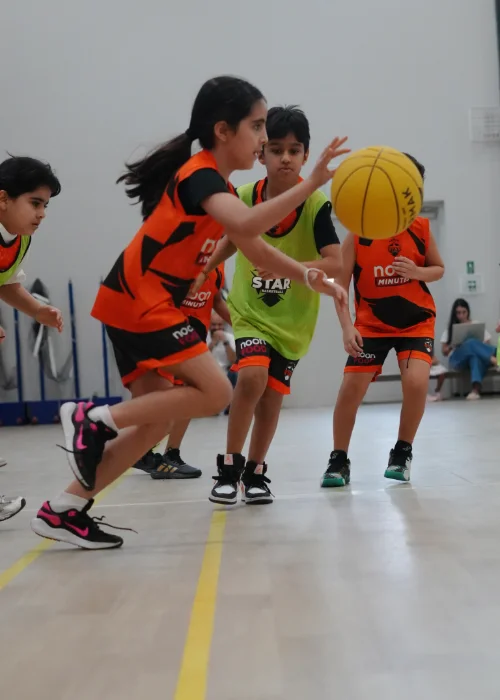
Star Sport Academies’ girls’ basketball programme serves ages 4–18 in Dubai through girls-only groups. That provides a verified starting point. Families can then use a trial to decide whether the particular coaching environment, group and practical schedule are right for their daughter.
Why a Girls-Only Basketball Environment Matters
Girls can succeed in many training formats, and no single environment suits every player. A dedicated girls-only programme creates an important option. It makes girls’ participation central rather than incidental.
When a newcomer enters a court filled with girls learning, leading and competing, she sees immediate evidence that she belongs in the sport. She does not need to imagine a place for herself; the place already exists.
Girls-only groups can help programmes respond to different entry histories. Some players have years of informal basketball experience. Others may have had fewer chances to play or may feel unsure about joining. Coaches can build a culture that welcomes both while maintaining genuine sporting standards.
The environment can also increase leadership opportunities. Girls handle the ball, organise teammates, defend demanding opponents and take responsibility in games. Leadership is not reserved for one highly vocal player. Different girls can learn to communicate, demonstrate, encourage and make decisions.
The label alone does not guarantee quality. Families should still evaluate the coaching, safety, group fit and level of challenge. The advantage is that the programme is explicitly built around girls’ participation and progression.
Basketball Gives Every Player Repeated Decisions
Basketball is fast. Possession changes quickly, space opens and closes, and every player must respond both with and without the ball. That makes the sport a rich environment for learning.
When a girl receives a pass, she may have only a moment to shoot, drive, pass or protect possession. When a teammate has the ball, she must decide how to create space or offer support. When possession is lost, she needs to transition into defence.
These decisions connect technique to understanding. A player may know how to dribble in an empty court, but the game asks whether she can use that dribble to escape pressure or create an advantage. She may practise passing, then learn which passing angle helps a teammate most.
Good basketball coaching does not remove decisions by directing every movement. It gives players clear principles, creates realistic practice situations and helps them recognise useful information. Over time, girls become less dependent on constant instruction and more able to read the game.
The Foundations of Her Game
A welcoming programme must still teach basketball properly. Beginners need foundations, while experienced players need those foundations challenged under greater speed and pressure.
Ball handling
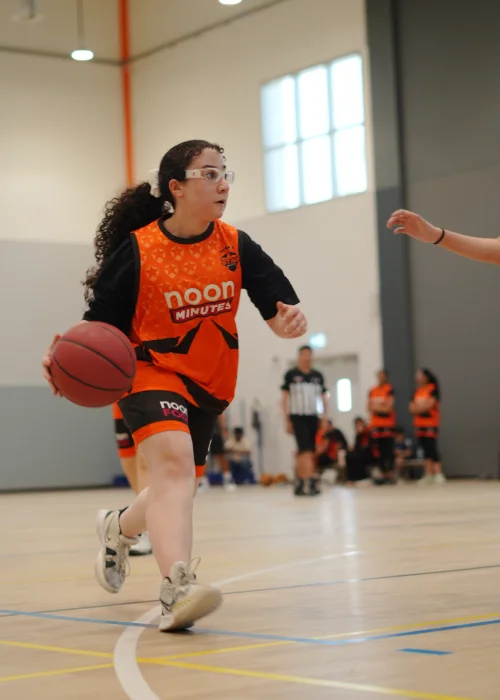
Players learn to control the ball with either hand, change direction and pace, protect possession and keep awareness beyond the dribble. Ball handling should develop from stationary familiarity into movement and decisions against defenders.
Passing and catching
Passing connects the team. Girls practise accuracy, timing and appropriate choices, while catching includes preparation, strong hands and readiness for the next action. Passing exercises become more valuable when players must read teammates and defenders.
Shooting
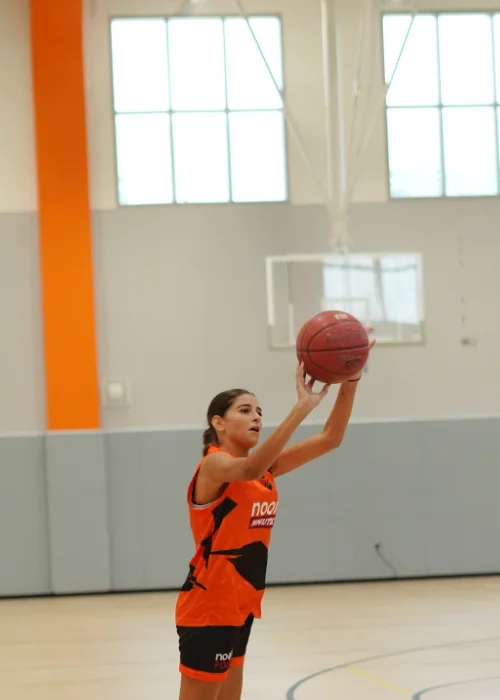
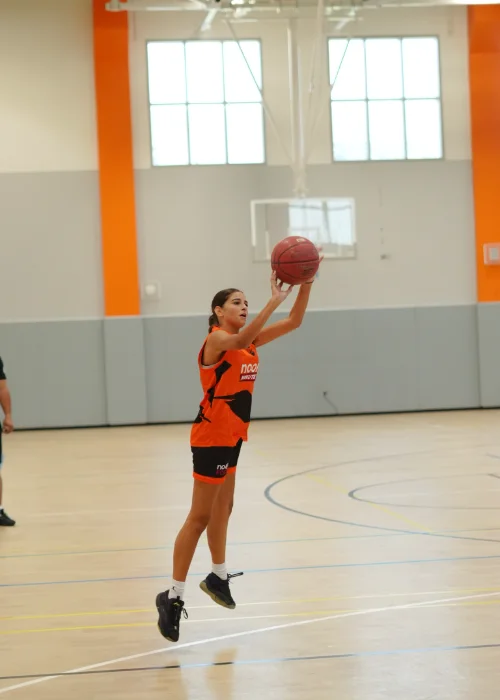
Shooting development includes balance, hand position, alignment, rhythm and follow-through. Younger or less experienced girls need distances and equipment demands appropriate to them so sound movement can develop without forcing the ball.
Footwork
Stops, pivots, changes of direction and balanced movement support almost every basketball action. Footwork helps players create space, avoid violations and defend safely.
Defence
Defence teaches stance, movement, positioning, communication and responsibility. Players learn to compete without reckless contact and to understand how individual defence supports the team.
Rebounding
Rebounding combines anticipation, positioning, timing and commitment. It reminds girls that valuable contributions are not limited to scoring.
These skills develop through repetition, but repetition should not become mindless. Coaches connect technique to the situations in which it is used.
Belonging Is Built Through Daily Behaviours
Putting girls into one group does not automatically create a team. Belonging grows through the way people act each week.
A coach can begin by learning names, introducing newcomers and rotating partnerships. Established players can be expected to include others rather than remain in closed friendship groups. Team standards can make encouragement, effort and respectful communication normal.
Belonging does not require every girl to have the same personality. One may speak confidently on her first day. Another may need several sessions before using her voice. Both should receive opportunities to contribute.
Nor does belonging mean avoiding competition. Teammates can challenge one another intensely while preserving respect. They can fight for a rebound, defend hard and still help each other reset after a mistake. A strong culture teaches girls that demanding more from the group and supporting the group are connected.
Parents may notice belonging in small details. Their daughter knows where to go when she arrives. Teammates greet her. She talks about a shared activity. She begins preparing her own kit because attendance matters to her.
A Serious Programme Welcomes Beginners
Some families assume “serious basketball” means a programme only for experienced players. In reality, a serious development system needs a well-designed starting point.
A complete beginner deserves clear instruction, suitable equipment demands and enough contact with the ball to learn. She should not spend the session watching advanced players or be placed into a game without understanding basic boundaries.
Coaches can simplify rules, reduce space, adjust pressure and use smaller groups. These changes do not make the learning meaningless. They allow the beginner to engage with the essential problems of basketball at a manageable level.
Standards can begin immediately. A new player can be expected to listen, try, respect teammates and respond to feedback. Technical expectations then grow with experience.
Welcoming beginners strengthens the whole programme. Every established player once needed someone to explain the first dribble, pivot or defensive stance.
Experienced Girls Need a Real Next Challenge
Belonging also means an experienced player is not asked to repeat easy activities indefinitely. Coaches should understand what she already does well and identify the next demand.
The challenge may involve dribbling under greater pressure, quicker decisions, improved off-ball movement, shooting consistency, defensive positioning or leadership. It may involve playing against stronger opposition or understanding team tactics in greater depth.
Progress should not be reduced to scoring more points. An experienced guard may improve by protecting possession and creating better chances for teammates. A forward may learn defensive rotations and rebounding responsibility. A strong individual player may become more valuable by communicating and making others better.
Star’s approved programme message includes progression into real games and competition when girls are ready. Families should ask how readiness is evaluated, what game opportunities apply to the relevant group and how match learning connects back to training.
Structured Coaching Makes Court Time Count
A session can look busy without producing much learning. Structure ensures that time on court has a purpose.
A well-designed session usually has a clear theme. Warm-up activities prepare movement and attention. Technical tasks introduce or refine an action. Pressure and decision-making are then added. Small-sided or conditioned games allow players to apply the theme in a realistic context.
Coaches observe throughout. They give concise feedback, demonstrate where useful and allow players to try again. Activities progress when the group is ready rather than changing simply because a timer ends.
Structure also includes organisation. Equipment and spaces are prepared, transitions are efficient and players are not left in long queues. In a basketball gym, where space may be shared or time limited, good organisation directly affects the number of meaningful repetitions each girl receives.
Parents can ask what the programme teaches across a season. A clear curriculum helps weekly sessions connect into development rather than become unrelated collections of drills.
Feedback Should Help Her Know What to Do Next
Girls deserve more than praise or criticism. They need information.
Specific feedback may identify how a player lowered her centre of gravity to protect the dribble, squared her feet before shooting or saw the help defender before passing. A correction might focus on one adjustment and provide an immediate chance to repeat the action.
Good feedback is understandable for the player’s age. It also preserves dignity. Sarcasm, humiliation and public comparison can make girls reluctant to take risks, while vague positivity does not teach them how to improve.
Coaches should balance instruction with independent thinking. If every possession is controlled by shouting from the side, players do not learn to read the court. Guided questions can help: What space opened? Where was the next pass? What happened after the screen?
Over time, players can begin giving themselves feedback. They recognise an error, adjust and continue. That ownership is one of the clearest signs that coaching is working.
Team Play Gives Individual Skill a Purpose
Basketball highlights individual ability, but no player controls the entire game alone. Even an excellent scorer needs spacing, passes, screens, defensive help and rebounds from teammates.
Girls learn that movement can help the team without touching the ball. A cut can clear space. A screen can free a teammate. A defensive rotation can prevent an easy basket. Communication can stop confusion before it becomes a scoring chance.
Coaches should recognise these contributions so players do not equate value only with points. The girl who makes the extra pass or sprints back in transition may change the possession.
This wider understanding gives more players meaningful identities within the team. It also creates smarter basketball. Girls begin asking not only “What can I do?” but “What does the team need now?”
Real Games Complete the Learning Cycle
Training provides repetition and controlled challenge. Games add uncertainty, officials, opponents, time, score and emotion. Players need both.
In real games, technique must survive pressure. Girls discover whether they can communicate when tired, recover after a turnover and choose effectively when the intended play breaks down.
Competition should be introduced when appropriate to the group. Younger or newer players need meaningful involvement and expectations they understand. More experienced girls need increasingly demanding opposition and tactical responsibility.
The score matters because it gives the game direction, but it should not become the only measure of development. Coaches can identify process goals such as transition effort, spacing or defensive communication. Afterward, those observations inform the next training cycle.
Families should confirm the actual match format and schedule for their daughter’s group rather than assume every age receives identical competition.
Physical Development Through Basketball
Basketball includes acceleration, deceleration, jumping, landing, lateral movement and repeated changes of direction. Age-appropriate sessions can help girls develop coordination, balance and general movement confidence.
Physical development should be progressive. Younger children benefit from varied movement and body awareness. Older players can learn sound strength, speed and conditioning habits suited to their training history and overall schedule.
Coaches should teach safe movement rather than using physical work only as punishment. Landing control, stopping mechanics and spatial awareness support performance and responsible participation.
Dubai families should also expect clear attention to hydration and venue conditions. Indoor facilities reduce direct sun exposure but do not remove the need for sensible preparation and water. Relevant health or injury information should be shared appropriately, and medical concerns require qualified medical advice.
Confidence Comes From Participation and Preparation
The phrase “her court” can feel empowering, but confidence cannot be installed through a slogan. It develops as girls gain evidence of competence and connection.
A player makes a pass under pressure, learns a move, defends an opponent or communicates in a game. She realises that practice changed what she could do. She also sees teammates rely on her.
Confidence does not always become loudness. It may appear when a quiet girl asks for the ball, returns after a mistake or accepts a new role. Coaches should notice different expressions of growth.
The environment matters because players need enough safety to attempt difficult actions. This is not freedom from correction. It is trust that errors will be addressed constructively and that one poor moment will not remove her place in the group.
What Parents Can Do From the Sideline
Parents enable participation and strongly influence how girls interpret sport. The most supportive approach combines interest with space for ownership.
Helpful habits include arriving on time, following programme guidance, encouraging attendance and allowing coaches to provide technical instruction. After sessions, parents can ask what their daughter enjoyed or learned rather than beginning with statistics.
Avoid comparing her with teammates. Development rates differ, particularly across ages 4–18. Physical growth, previous experience and confidence all affect visible performance.
If a concern arises, use the academy’s communication route at an appropriate time. Coaches cannot hold a detailed conversation while supervising a session. Calm, specific questions are more productive than sideline confrontation.
As she gets older, allow her to manage more of her equipment, preparation and communication. Her court should gradually become her responsibility too.
How to Evaluate a Girls’ Basketball Academy in Dubai
A trial provides direct evidence. Families can observe whether the programme’s promises appear in practice.
Look for:
1. A deliberate welcome for new players. 2. Girls-only groups organised appropriately for age and ability. 3. A clear learning purpose behind activities. 4. Frequent involvement rather than long queues. 5. Coaching that combines demonstrations, feedback and decisions. 6. Respectful treatment of mistakes. 7. Meaningful standards for teamwork and behaviour. 8. Suitable challenge for beginners and experienced girls. 9. Clear information about games, progression and communication. 10. Professional safeguarding and supervision.
Ask about the recommended group, weekly schedule, fees, kit, game opportunities and how progress is reviewed. Consider travel and school commitments, because consistent attendance is essential to becoming part of the team.
Girls’ Basketball for Ages 4–18 in Dubai
Star Sport Academies offers a girls’ basketball programme for ages 4–18 in Dubai. The approved programme description includes girls-only groups, structured coaching and progression into real games and competition when players are ready.
Specific schedules, venues, trial terms and match opportunities may change. Families should contact Star directly for current verified details and the most suitable entry point.
A trial allows a girl to enter the real environment. She can meet the coach, participate with the group and decide how the court feels. Parents can assess both quality and practical fit.
She does not need to arrive as a complete player. The purpose of joining an academy is to learn.
A Court Where Her Development Is Central
Girls’ basketball is strongest when girls are treated as full participants in the game. They receive serious instruction, hold meaningful roles and have appropriate opportunities to compete. Beginners are welcomed into a clear starting point, and experienced players can see a next challenge.
On this court, a player learns to handle the ball and handle pressure. She practises shooting and speaking up. She competes for rebounds and supports teammates. Each experience adds to her understanding of both the sport and her place within it.
That is what belonging should mean: not simply being allowed inside, but being coached, challenged and valued once she arrives.
Book a Girls’ Basketball Trial in Dubai
Give your daughter the opportunity to experience a girls-only basketball environment built around learning and team play. Contact Star Sport Academies for current details and request an appropriate trial for ages 4–18 in Dubai.
Explore the Girls’ Basketball programme, check the basketball locations and timetable, or book a girls’ basketball trial.
Current Supplied Venues
Basketball network
- Al Barsha
- RIT–DSO
- Ashmount School
- Jumeirah–JBS
- Mirdif Uptown School
- Al Khaleej Al Warqa
- South School
- Sharjah
- Al Qusais
Please note: These locations belong to Star’s wider basketball network. Contact Star to confirm which venues currently host girls-only basketball groups, age groups and trial sessions.
Frequently Asked Questions
Can a complete beginner join girls’ basketball?
Yes, when an appropriate group is available. Coaches should introduce foundational ball handling, passing, shooting, footwork and game understanding progressively.
What ages does Star girls’ basketball serve?
The approved programme is for girls aged 4–18 in Dubai, subject to current timetable and group availability.
Why choose a girls-only basketball group?
It creates an environment where girls’ participation, leadership and development are central. Individual fit still matters, so a trial is the best way to assess the experience.
Do girls play real games?
Star’s programme includes progression into real games and competition when players are ready. Families should confirm the opportunities relevant to the specific age and ability group.
What should parents look for during a trial?
Observe the welcome, session structure, amount of player involvement, coaching feedback, team culture, level of challenge and safety standards.
How quickly will my daughter improve?
Progress varies with age, experience, attendance and individual development. Look for improvement in technique, decisions, communication and participation across weeks and seasons rather than expecting an instant result.
What should we bring to a trial?
Ask Star for current venue-specific guidance. Comfortable sports clothing, suitable footwear and water are common needs, but official instructions should be followed.