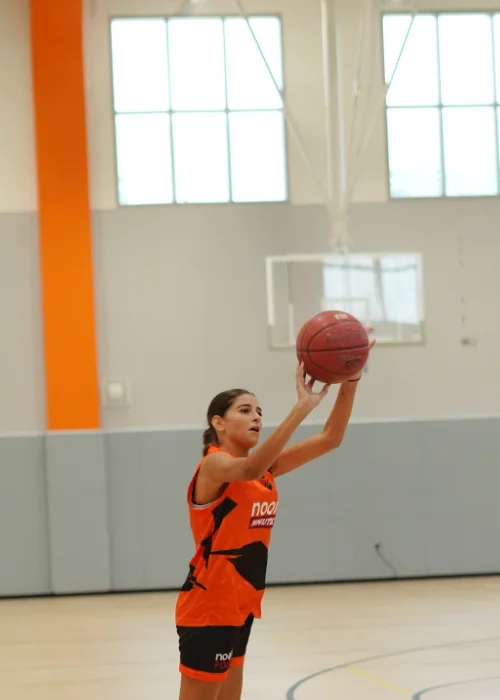
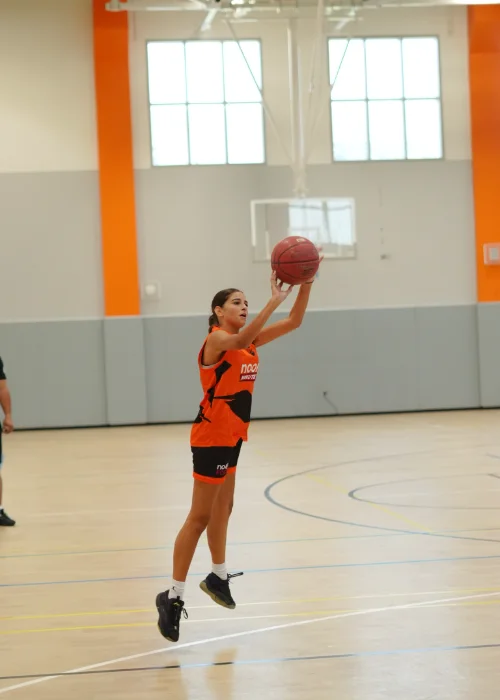
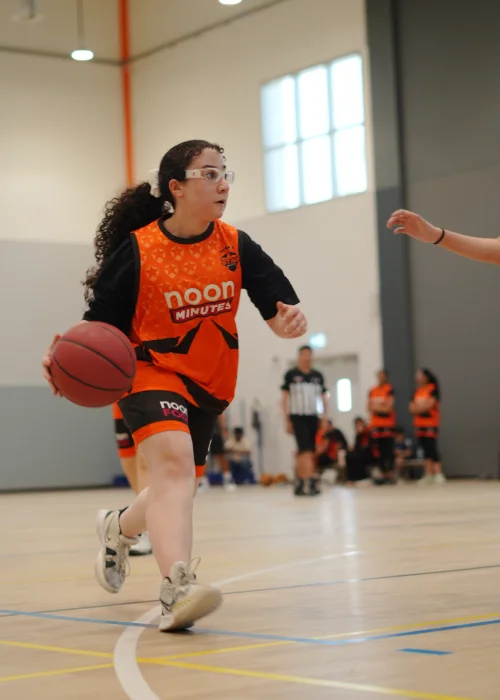
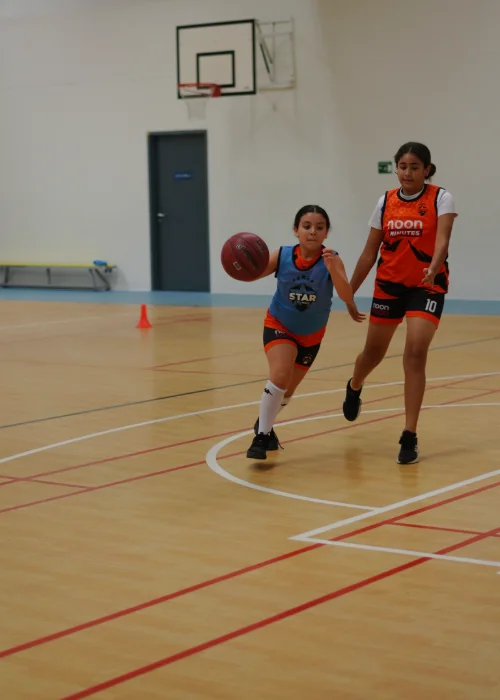
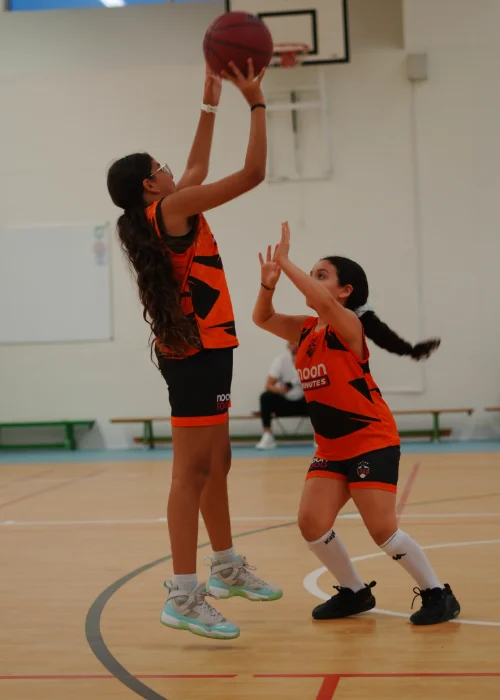
Strength in Basketball Is Shared
Basketball makes individual actions visible. One player shoots, passes or contests the ball. Yet each action is shaped by four teammates. Space, support, communication and trust determine whether individual skill helps the group.

“Stronger together” captures that relationship. A girl develops her own abilities while learning that performance depends on connection. She speaks because a teammate needs information. She runs back because the group needs protection. She responds to a mistake because the next possession belongs to everyone.
These experiences can support useful personal and social habits. They should not be presented as guaranteed personality transformation. Children respond differently, and the quality of coaching matters. What basketball reliably provides is a repeated setting in which communication, responsibility, resilience and cooperation can be practised.
For families exploring girls’ basketball in Dubai, the question is therefore broader than whether a daughter will learn to dribble or shoot. It is whether the programme uses the team environment deliberately, helping girls understand how their actions affect others and how collective effort can strengthen everyone.
Teamwork Is Learned Through Real Dependence
Telling children to work together is easy. Basketball makes teamwork necessary.
A player cannot create good spacing if teammates all move toward the same area. A defender cannot help and recover unless the group communicates. A fast break requires one player to secure possession while others run into useful lanes.
These situations turn an abstract value into concrete behaviour. Teamwork may mean:
- moving without the ball to create space;
- making the extra pass;
- setting a legal screen;
- helping a defender and rotating responsibly;
- communicating a matchup;
- pursuing a rebound;
- encouraging a teammate after an error; or
- accepting a role that serves the current group.
Coaches should explain these contributions and recognise them. If praise focuses only on scoring, girls receive a narrow message about value. When unselfish movement, defence and communication are visible, more players understand how they can help.
Communication Becomes a Practical Skill
The court changes too quickly for silent assumptions. Girls need to ask for the ball, call a screen, identify an opponent and organise transition. Communication has an immediate consequence.
For a quiet player, this can be a manageable way to begin using her voice. A short name or cue is enough to influence the possession. As she becomes more comfortable, she may explain an idea, lead a huddle or help a teammate understand an activity.
Effective communication includes listening. Players receive information while moving and must decide whether it is relevant. They learn that volume alone is not leadership; useful timing and respectful language matter more.
Coaches can create communication expectations within games and exercises. They can also model calm clarity. If adults rely on angry shouting, players may copy noise without understanding. If coaches use concise information and questions, girls learn a more purposeful style.
Trust Grows Through Reliable Actions
Trust is central to team play. A player passes because she expects her teammate to meet the ball. She helps on defence because she believes another player will cover the space. She attempts a difficult action because one mistake will not result in rejection.
Trust develops over time. Girls become reliable through attendance, effort, preparation and consistent responses. They learn each other’s movement and preferences through repeated possessions.
This trust is not blind. Teammates can hold one another accountable. If a player repeatedly fails to return on defence, the team needs an honest standard. Constructive accountability focuses on the behaviour and next response rather than attacking the person.
Coaches protect trust by applying expectations fairly and avoiding humiliation. Players should understand that feedback is part of improvement and that everyone remains responsible to the group.
Responsibility Starts With Simple Routines
Team membership brings practical obligations. A young girl begins by bringing water, listening when the coach gathers players and helping return equipment. As she matures, she can manage her kit, arrival time, attendance communication and recovery habits.
Responsibility also appears during play. A defender stays engaged even when she wants to attack. A ball handler protects possession. A substitute remains connected and prepared. A player acknowledges an error and completes the next task.
These habits become stronger through repetition. Coaches can assign age-appropriate roles such as leading part of a warm-up, organising a line or reflecting on a team target.
Parents help by gradually transferring ownership. Doing everything for an older player may keep the routine efficient but prevents her from learning. Small, recoverable mistakes—such as needing to check her own equipment list—can become part of the process.
Resilience Is the Ability to Return to the Game
Basketball contains frequent errors. A player misses a shot, loses the ball or is beaten by an opponent. The next possession may begin within seconds.
Resilience in this setting is not pretending disappointment does not exist. It is the growing ability to feel it, reset attention and act again.
Coaches can teach a simple response. Recognise what happened, use a brief cue, communicate and transition. Later, the player can analyse the error in training or reflection. During play, she must remain available to the team.
This process gives girls evidence that one mistake does not have to control what follows. It also helps the group. Teammates become stronger when they respond with useful information rather than blame.
Parents can reinforce resilience by avoiding immediate criticism after games. Allow emotion to settle, then discuss what the player noticed and what she can influence next time.
Confidence Becomes Connected to Contribution
Confidence is often imagined as bold speech or visible dominance. In basketball, it can be quieter. A girl may show confidence by asking for the ball, attempting a correct decision, defending a stronger opponent or communicating after an error.
Team contribution gives confidence substance. The player sees that her movement opened space, her pass created a shot or her defensive effort helped the group. She does not need to be the leading scorer to matter.
Specific coaching feedback helps her recognise this evidence. “Your early help stopped the drive” explains value more clearly than general praise.
Confidence also becomes more durable when it includes preparation. The girl learns that she can improve through practice rather than waiting to feel naturally capable. She enters challenges with tools she has built.
No academy should promise that every girl will become confident in every setting. A positive basketball programme can create repeated opportunities to practise competence and visible contribution.
Leadership Has Many Forms
Basketball teams need more than one leader. A vocal captain can organise the group, but leadership may also appear through preparation, calm decisions, consistent defence or support for a newcomer.
Coaches can distribute leadership opportunities so the same confident girls do not control every moment. A quieter player might demonstrate an activity, communicate one defensive cue or lead a short reflection.
Girls should learn that leadership is responsibility rather than status. A leader helps the team understand, maintains standards and responds constructively under pressure. Blaming others or demanding special treatment weakens the group.
Older or experienced players can become role models for younger teammates. Their behaviour shows what belonging to the programme looks like. This responsibility can deepen their own maturity while making the pathway more visible for others.
Healthy Competition Teaches Emotional Control
Competition creates emotion because the outcome matters. Players may feel excitement, frustration, disappointment or pressure. These feelings are not a flaw in sport; they are part of what makes competition educational when managed responsibly.
Girls learn to pursue a result while respecting officials, opponents and rules. They practise responding when a decision feels unfair and continuing when the score is difficult.
Emotional control does not require becoming expressionless. Players can celebrate, communicate and care deeply. They learn which behaviours help the next action and which damage the team.
Coaches set the example. Calm correction, respectful disagreement and perspective after results show girls how competitive intensity can coexist with control.
Competition must remain appropriate to age and readiness. Excessive pressure can reduce learning, while challenge with support can strengthen resilience and responsibility.
Conflict Can Become a Lesson in Repair
Teams do not agree at all times. Girls may become frustrated about roles, passes, playing time or effort. A strong culture does not deny conflict; it provides standards for handling it.
Players can learn to describe behaviour rather than attack character, listen to another view and identify what must happen next. Apology has value when connected to changed action.
Coaches should intervene when power differences, bullying, discrimination or persistent exclusion are involved. Telling players simply to “sort it out” is not enough when safety or dignity is at risk.
Parents should raise concerns through the appropriate academy channel, sharing specific information and remaining open to multiple perspectives. Managed disagreement can teach repair, but harmful patterns should never be rebranded as toughness.
The ability to stay connected through conflict can make both teammates and the team stronger.
Decision-Making Develops Independence
Basketball requires players to process information quickly. A coach cannot dictate every choice from the sideline, and attempting to do so prevents learning.
Girls develop independence when training includes realistic decisions. They identify space, evaluate defenders and select whether to shoot, pass or drive. On defence, they decide when to help, recover or communicate a switch.
Coaches can guide with principles and questions. After a possession, a player may explain what she saw. This reflection helps her connect the outcome to the decision without becoming afraid of being wrong.
Independent decision-making benefits the team because players adapt when plans break down. It also gives the girl ownership of her development. She becomes an active learner rather than someone waiting for instructions.
Discipline Means Consistency, Not Punishment
Sporting discipline is sometimes confused with harshness. In development, discipline means practising useful behaviours consistently.
A disciplined player arrives prepared, listens, performs fundamentals with attention and maintains effort when an activity is not her favourite. She respects team rules and completes defensive responsibilities.
Coaches support discipline with clear expectations and logical consequences. Exercise should not be used to humiliate girls or make fitness feel like punishment. Standards work best when players understand their purpose.
Team discipline also includes tactical connection. Girls maintain spacing, follow defensive principles and make choices within a shared plan. Creativity remains possible, but it operates inside responsibilities that help everyone.
Over time, consistent habits reduce dependence on mood. Players learn that development is supported by what they repeatedly do.
Physical Strength Includes Control
Basketball asks girls to accelerate, stop, jump, land and change direction. Age-appropriate training can develop coordination, balance, strength and movement confidence.
Physical strength should not be defined only by force. Control matters. A player learns to decelerate safely, hold balance under pressure and use legal body position. These abilities support both performance and responsible participation.
Younger girls benefit from varied movement and simple body awareness. Older players can progress toward more structured physical preparation based on maturity, experience and total workload.
Coaches should monitor conditions, hydration and signs of discomfort. Players need to understand that reporting pain is responsible, not weak. Medical concerns belong with qualified professionals.
Girls develop at different rates, so physical comparison should be handled carefully. Early size or strength does not define long-term potential.
A Diverse Dubai Team Expands Social Learning
Dubai basketball groups may include girls from many nationalities, schools, languages and sporting cultures. The team gives them a shared objective.
Players learn to communicate across differences, remain patient when understanding varies and recognise multiple ways of contributing. Coaches can support inclusion through clear demonstrations, mixed groupings and consistent standards.
This does not mean differences disappear. It means girls repeatedly cooperate with people whose backgrounds may not match their own. A pass, defensive rotation or shared game plan creates immediate common ground.
Inclusive representation also helps girls see that there is no single look, personality or history required to become a basketball player.
Growth Changes Across Ages 4–18
The life skills practised through basketball should reflect the player’s stage.
Young children may learn to take turns, listen to simple instructions, share equipment and rejoin an activity after frustration. These are significant achievements.
Middle age groups can take more responsibility for communication, cooperation and response to comparison. They begin understanding team tactics and the consequences of individual choices.
Teenagers can handle greater ownership, leadership and honest performance review. They balance sport with school and other demands, making preparation and time management increasingly relevant.
Coaches should also consider experience. A teenage beginner deserves foundational instruction without being treated like a small child. A young advanced player needs challenge without adult pressure.
How Coaches Make Life-Skill Development Real
Life skills do not appear simply because basketball is played. Coaches make the connection through environment and behaviour.
Effective coaches:
- design tasks that require cooperation and decisions;
- give every player meaningful involvement;
- use specific, respectful feedback;
- recognise communication and unselfish play;
- distribute responsibility;
- teach recovery after mistakes;
- manage conflict and exclusion;
- apply standards consistently; and
- model the conduct they expect.
Reflection can help girls identify what they learned. A brief question—“How did our communication affect defence?”—connects the team behaviour to the basketball outcome.
Claims should remain grounded. Coaches provide opportunities and guidance; each player’s personal development follows an individual path.
How Parents Can Reinforce the Right Habits
Parents influence the meaning girls attach to sport. If adults discuss only points and wins, other lessons become invisible.
After training or games, ask about communication, decisions and teamwork. Notice when your daughter prepares independently, supports a teammate or responds well after difficulty.
Avoid technical coaching from the sideline. Conflicting instructions divide attention and reduce player ownership. Offer encouragement and let the academy coach manage the game.
Keep mistakes and results in perspective. One difficult performance is not evidence that the entire journey has failed. At the same time, listen carefully to persistent concerns about exclusion, safety or distress.
Praise should be specific and honest. “I saw you keep communicating after the turnover” helps her recognise a repeatable strength.
What to Look for During a Girls’ Basketball Trial
Families can assess whether “stronger together” appears in practice.
Observe whether:
1. girls communicate and cooperate during activities; 2. the coach recognises contributions beyond scoring; 3. mistakes receive constructive responses; 4. stronger players are challenged to support the group; 5. quieter or newer players receive meaningful involvement; 6. competition remains respectful; 7. responsibilities suit the age group; 8. the session teaches real basketball; and 9. safeguarding and parent communication are clear.
Ask your daughter what she learned and how the group felt. The best fit combines sporting development with a culture where she can contribute.
Practical consistency matters too. A sustainable Dubai location and timetable allow habits and relationships to grow over time.
Structured Girls’ Basketball in Dubai
Star Sport Academies offers girls-only basketball for ages 4–18 in Dubai. The approved programme includes structured coaching, team play and progression into real games and competition when appropriate.
Families should contact Star directly for current venues, schedules, fees, trial arrangements and opportunities for the relevant group. A trial provides a real view of the coaching and culture.
Girls do not need to arrive with fully developed communication, confidence or basketball ability. The programme should give them age-appropriate ways to practise each one.
Strong Players Help Build Strong Teams
Individual development and collective strength reinforce each other. A girl with better skills can contribute more effectively. A connected team gives her more meaningful situations in which to use those skills.
Through basketball, she learns that strength can mean speaking, listening, recovering, preparing and helping. It can mean taking a difficult shot, making the unselfish pass or accepting responsibility after an error.
These lessons are created possession by possession. Girls grow together because the game repeatedly asks them to rely on one another—and because a thoughtful coach helps them understand what that reliance requires.
Book a Girls’ Basketball Trial in Dubai
Give your daughter a place to build basketball skills, team habits and personal responsibility. Contact Star Sport Academies for current details and request a girls’ basketball trial for ages 4–18 in Dubai.
Explore the Girls’ Basketball programme, check the basketball locations and timetable, or book a girls’ basketball trial.
Current Supplied Venues
Basketball network
- Al Barsha
- RIT–DSO
- Ashmount School
- Jumeirah–JBS
- Mirdif Uptown School
- Al Khaleej Al Warqa
- South School
- Sharjah
- Al Qusais
Please note: These locations belong to Star’s wider basketball network. Contact Star to confirm which venues currently host girls-only basketball groups, age groups and trial sessions.
Frequently Asked Questions
What life skills can girls practise through basketball?
Basketball can provide repeated practice in communication, teamwork, responsibility, decision-making, resilience, emotional control and leadership.
Does playing basketball guarantee greater confidence?
No personal outcome can be guaranteed. A quality programme can create supportive opportunities to build competence and contribution, which may strengthen confidence over time.
Can a shy girl contribute to a basketball team?
Yes. Contribution can begin through movement, effort and short practical communication. Coaches should support growth without requiring every player to adopt the same personality.
What ages does Star girls’ basketball serve?
The approved programme is for girls aged 4–18 in Dubai, subject to current group availability and schedules.
How does competition support character development?
Appropriate competition gives girls opportunities to manage pressure, respect rules, respond to results and remain connected to teammates during difficult moments.
How can parents support teamwork?
Value unselfish actions, avoid blaming teammates or officials, respect coaching boundaries and encourage consistent preparation and attendance.
Why attend a trial?
A trial lets the player experience the team and coaching environment while parents assess standards, fit, communication and practical arrangements.