Competition Begins Long Before the Opening Tip
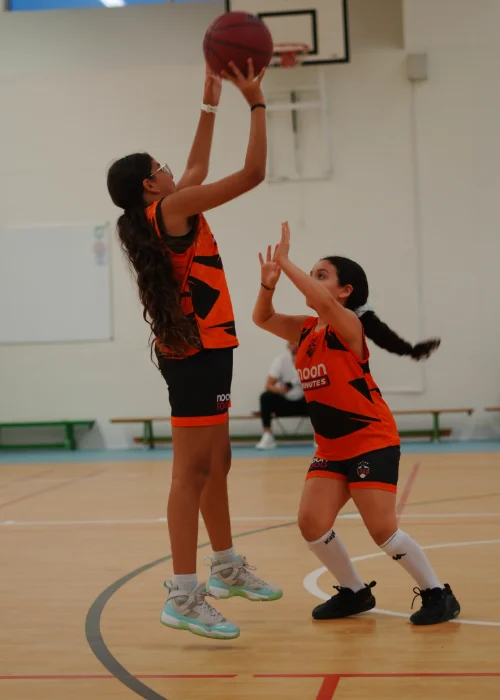
A competitive basketball player is not created simply by entering a league or wearing a team uniform. Competition exposes whatever training has built. Ball control, spacing, decision-making, defensive discipline, communication and emotional response all appear when an opponent applies pressure.
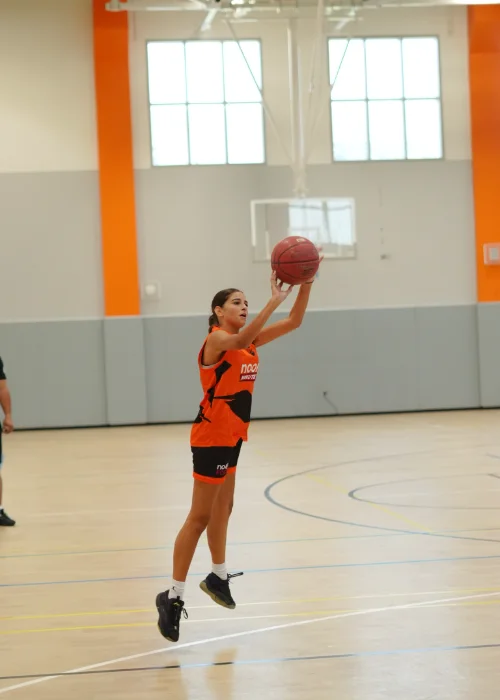
“Coached to compete” means preparation is deliberate. Girls learn techniques and then use them under increasing challenge. They understand team principles, practise game situations and receive feedback connected to their performance. Competition becomes a stage in development rather than a weekly judgement of worth.
For parents searching for competitive girls’ basketball in Dubai, the phrase “serious programme” should therefore mean more than intense language. Serious coaching has a curriculum, standards, appropriate progression and respect for the individual player. It challenges girls without treating pressure as proof of quality.
Star Sport Academies’ approved girls’ basketball programme serves ages 4–18 in Dubai through girls-only groups. It describes structured coaching from complete beginner to competitive player, with real games and competition when girls are ready. Families should confirm the current pathway and opportunities for the relevant group.
What Does “Ready to Compete” Mean?
Readiness is not one number or one impressive performance. It is a combination of qualities that allow a girl to participate meaningfully and safely at a particular level.
Coaches may consider:
- fundamental ball control;
- passing and catching under pressure;
- movement and spacing awareness;
- defensive habits;
- understanding of core rules;
- ability to listen and adapt;
- physical readiness for the format;
- attendance and preparation;
- communication and teamwork; and
- response to mistakes and competitive emotion.
The standard should reflect age and context. A young beginner may be ready for a friendly small-sided game without being ready for a demanding tournament. An experienced teenager may need stronger opposition and more complex tactical responsibilities.
Readiness also applies to the environment. Competition should offer meaningful involvement and suitable challenge. Placing a player into a format far beyond her current experience may create pressure without useful learning.
Serious Coaching Does Not Mean Watered-Down Expectations
Girls deserve genuine basketball standards. A dedicated girls’ group should not receive simplified attention, random activities or lower expectations merely because of gender.
Coaches can expect focus, effort, respectful behaviour and commitment while adapting teaching to age and experience. Technical quality matters. Team responsibilities matter. Competitive habits matter.
Equal standards do not require identical coaching for every individual. A complete beginner and advanced player need different tasks. Appropriate differentiation is a sign of expertise, not lowered ambition.
The strongest standard is progress toward clear basketball outcomes. Girls should understand what they are learning, what quality looks like and what their next challenge will be. Demanding practice becomes meaningful when it has direction.
Technical Skills Must Survive Pressure
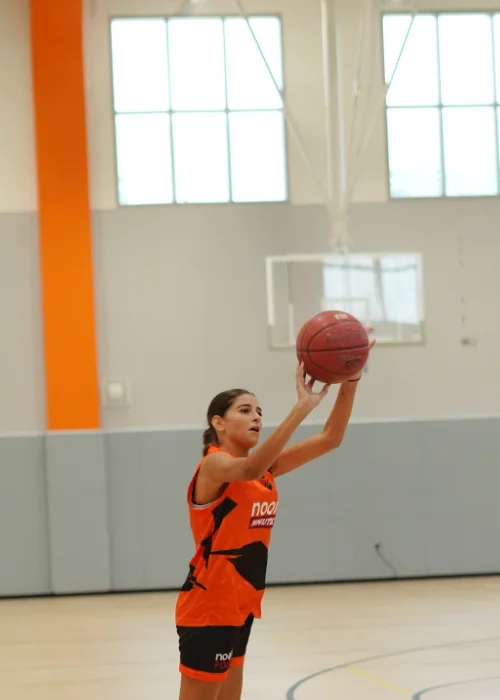
Competition tests technique in changing conditions. A dribble that works in an empty lane may fail against an active defender. A shooting motion may change when time is limited. Passing decisions become harder when angles close.
Coaches prepare girls by increasing pressure progressively.
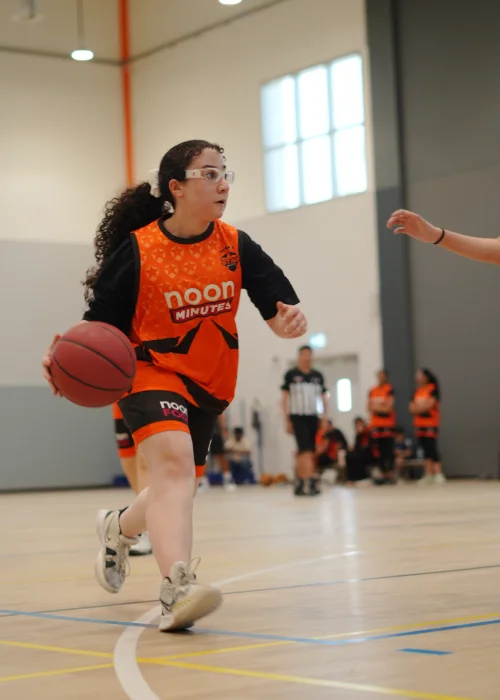
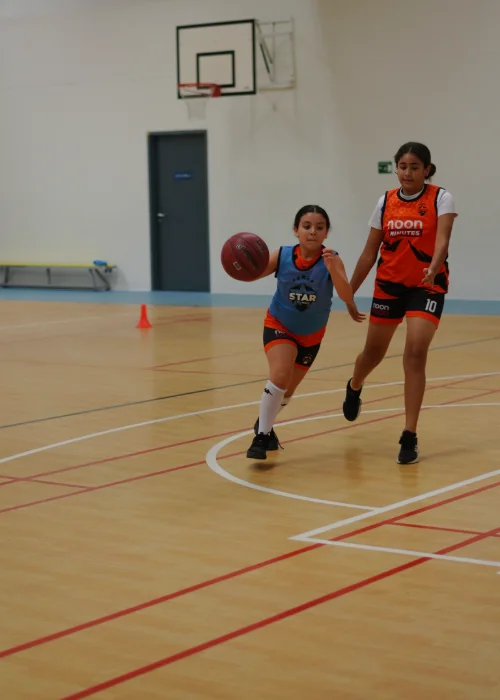
Ball handling under defensive pressure
Players learn to protect the ball, use either hand, change pace and keep awareness beyond the dribble. Defenders are introduced with controlled demands before game-speed situations.
Passing into useful advantage
Competitive passing requires timing and reading. Girls recognise help defenders, avoid predictable lanes and deliver the ball where a teammate can continue the play.
Shooting with realistic preparation
Players practise footwork before the catch, shots after movement and finishing against legal pressure. Shot selection becomes part of the skill.
Defensive execution
Girls develop stance, angles, lateral movement and controlled contests. They learn that reaching for steals can damage team defence when positioning is poor.
Rebounding and possession
Competitive possessions are often decided after a missed shot. Players learn to make contact legally, pursue the ball and secure it before beginning transition.
Pressure should reveal the next learning need without destroying technique through demands that arrive too quickly.
Game Understanding Creates Competitive Players
Athletic ability can influence moments, but basketball intelligence helps players influence complete games. Girls need to recognise space, advantage, time, score and team organisation at an appropriate level.
On offence, they learn when to attack, pass, cut, screen or reset. On defence, they identify matchups, help positions and transition priorities. They understand that their task changes when possession changes.
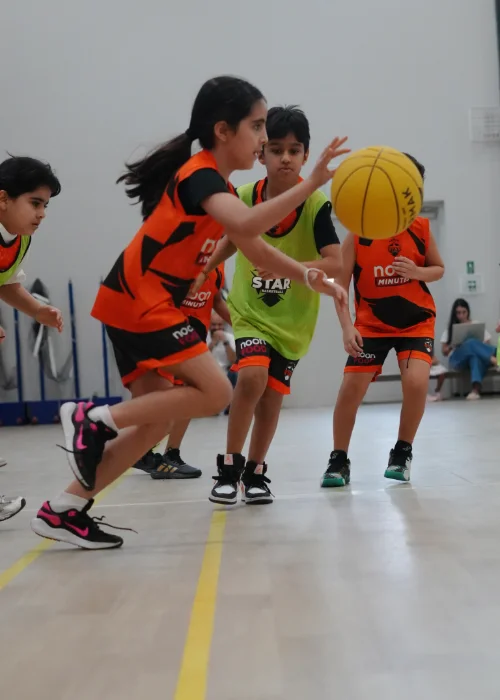
Coaches develop this through small-sided games and guided scenarios. Fewer players create more decisions and make cause and effect easier to see. A three-on-three activity may focus on spacing and help defence before concepts transfer into five-on-five play.
Questions can deepen learning: What did the defender give you? Where was the numerical advantage? Why did the passing lane close? The player becomes more able to analyse instead of waiting for the coach to direct every move.
Competitive teams need adaptable thinkers because opponents will disrupt the original plan.
Training Intensity Needs a Purpose
Competitive preparation requires intensity, but intensity is not simply louder coaching or nonstop running. Useful intensity reflects the pace, attention and decision demands of the game.
A short activity performed with full defensive pressure may be more valuable than a long, unfocused drill. Rest and coaching pauses can preserve quality. Players need enough recovery to execute the objective correctly.
Coaches can create intensity through scoring systems, time limits, constrained space and balanced opposition. The challenge should connect to basketball, not become arbitrary stress.
Girls also learn how to produce their own intensity. They communicate, transition quickly and maintain standards without needing constant external emotion. This internal responsibility is important for competition because the coach cannot supply energy for every possession.
High standards remain compatible with care. Fatigue, injury concerns and environmental conditions require professional judgement.
Physical Preparation Supports Game Demands
Basketball includes repeated accelerations, stops, jumps, landings and changes of direction. Competitive players need movement capacity that supports their technical and tactical tasks.
For younger girls, physical preparation should emphasise varied movement, coordination, balance and safe foundations. As players mature and build training history, coaches can introduce more structured strength, speed and conditioning work.
Landing and deceleration deserve attention because competitive speed increases the forces a player must control. Movement quality helps girls stop balanced, change direction and remain available for the next action.
Conditioning should have a reason and suit the stage. Exercise used as humiliation after mistakes teaches the wrong lesson. Players need to associate physical preparation with performance, health and responsibility.
Total workload matters. School sport, other activities, games and recovery should be considered. Pain or medical concerns require qualified advice, and players should be encouraged to communicate honestly.
Competition Requires Emotional Preparation
Real games produce uncertainty. A referee makes a difficult call, an opponent scores repeatedly or the player misses an important shot. Emotional preparation helps girls remain engaged.
Coaches can teach reset routines: breathe, use a short cue, communicate and return to the next task. The emotion is acknowledged without allowing it to control several possessions.
Players should experience pressure gradually. Practice games, time-and-score situations and appropriate competition give them chances to manage nerves. The aim is not to remove feeling; caring about the result is part of sport.
Girls also learn to handle success. A strong performance should create satisfaction without disrespect or complacency. Competitive maturity includes winning responsibly and understanding that the next challenge may be different.
No coach can guarantee confidence under every condition. Preparation gives players tools and experiences on which confidence can be built.
Team Roles Must Be Understood
Competitive basketball requires clarity. A girl should know what the team needs from her while continuing to develop a broad game.
Roles may relate to ball handling, spacing, defensive matchups, rebounding or communication. They should not become permanent labels that prevent young players from learning. A tall child should still have opportunities to handle and pass; a guard should still learn to rebound and defend.
Coaches can explain the current role and the development behind it. A player is more likely to accept responsibility when she understands how it helps the team and what she can work toward next.
Substitutes also need a role. Staying attentive, communicating appropriately and being prepared to enter are competitive skills. A team culture should not divide girls into those who matter and those who wait.
Meaningful involvement will differ by context, so families should ask how opportunities are managed for the relevant programme and competition.
Feedback Between Training and Games
Competition produces valuable evidence. Coaching turns that evidence into progress.
Before a game, girls benefit from a few clear process priorities. Too many instructions create overload. During play, coaches observe whether training concepts appear and use concise interventions rather than controlling every touch.
Afterward, review should consider both successful and difficult moments. What decisions worked? Which technical action broke down under pressure? How did the team respond in transition?
Those observations shape the following sessions. If the team struggled against pressure, training can recreate the problem at an adjustable level. The next game then tests the new learning.
This training–game–review cycle is central to competitive development. Games are not separate entertainment at the end of the week; they reveal the next curriculum need.
Playing Time and Development
Playing time is emotionally significant for players and families. There is no single policy suitable for every age, level and competition, but expectations should be clear.
Development-focused younger formats generally need meaningful participation so girls can apply learning. More competitive groups may make different decisions based on readiness, roles and game context. Even then, players need an understandable pathway and appropriate opportunities to develop.
Coaches should avoid promises they cannot sustain. Parents can ask how playing time is approached, how attendance and behaviour affect it, and what opportunities exist outside one match.
A girl who receives fewer minutes needs specific feedback and a plan she can influence. Vague messages can damage trust. At the same time, families should recognise that team selection includes multiple players and responsibilities.
Communication is most productive when calm and focused on development rather than immediate confrontation after a game.
Selection Should Be Evidence-Based
Selection decisions may include current performance, consistency, role fit, attendance, attitude and the demands of a specific competition. Responsible coaches use sustained observation rather than one highlight.
Physical maturity must be interpreted carefully. A girl who develops early may have a temporary advantage, while a technically intelligent player may need time for physical growth. Long-term potential cannot be reduced to size at one age.
Coaches should communicate decisions respectfully and avoid fixed labels. “Not selected today” should not become “not a basketball player.” Girls need truthful information about what to improve and where they can continue gaining experience.
Parents can support by keeping the relationship safe after disappointment. Listen first, then help the player identify controllable actions. If clarification is needed, contact the academy through the proper route.
Coaches Set the Competitive Culture
The coach’s behaviour under pressure defines the real standard. Preparation, calm communication and respect for officials model competitive discipline.
Strong coaches demand effort without humiliation. They correct mistakes specifically, recognise team actions and remain consistent when the score becomes difficult. They protect safeguarding and professional boundaries regardless of competitive stakes.
They also challenge stronger players to make others better. Talent does not excuse selfishness, disrespect or poor attendance. The competitive standard applies to behaviour as well as ability.
A healthy culture encourages girls to take appropriate risks because learning is still valued. Fear may produce short-term caution, but it limits independent decisions. Players need both accountability and enough trust to act.
Families should observe match-day coaching as carefully as training. It shows whether development principles survive when the result matters.
Parents Are Part of the Competitive Environment
Parents can support ambition without increasing unhelpful pressure.
Useful behaviours include:
1. Respecting coaches, teammates, opponents and officials. 2. Avoiding technical instructions from the sideline. 3. Valuing preparation and decisions as well as points. 4. Letting emotion settle before discussing a game. 5. Encouraging consistent attendance and recovery. 6. Keeping one selection or result in perspective. 7. Raising concerns calmly through the academy process.
Girls notice when adults blame referees or criticise teammates. Those behaviours make responsibility harder to learn.
Parents should also protect balance. Competitive commitment has real demands, but school, sleep, health and family life remain important. A sustainable pathway supports long-term participation better than constant urgency.
Progress Is Broader Than Wins and Statistics
Wins provide a clear objective, but they are affected by opponents, schedule, team stage and many other factors. Player development needs additional evidence.
Coaches and families can notice whether a girl:
- handles pressure with fewer turnovers;
- makes faster, better passing decisions;
- improves shot selection;
- maintains defensive position;
- communicates consistently;
- transitions quickly;
- rebounds with responsibility;
- understands her role;
- responds constructively to reduced minutes; and
- applies feedback from training.
Statistics can support evaluation when interpreted carefully, but they never tell the whole story. A player may make the pass that creates the assist or prevent an attack through positioning that produces no recorded number.
Progress should be reviewed across weeks and seasons, especially as girls grow and opposition changes.
From Beginner to Competitive Player
A competitive pathway needs a strong entry stage. Beginners develop ball familiarity, movement, simple rules and enjoyment. Foundations expand into pressured technique, team concepts and real-game decisions.
Progression is not identical for every girl. Some develop quickly in one area and slowly in another. Motivation may change. A player can enjoy serious training without pursuing the highest available competition, while another may seek increasingly demanding opportunities.
A responsible academy provides suitable next steps without making unrealistic promises. The pathway should remain open enough for late beginners and demanding enough for experienced girls.
Star’s approved programme message covers complete beginners through competitive players. Current group structure and movement criteria should be confirmed directly because schedules and opportunities may change.
What to Look for in a Competitive Girls’ Programme
During a trial or observation, ask:
- Is the session organised around a clear basketball objective?
- Do technical skills progress into pressure and decisions?
- Are girls active and challenged appropriately?
- Does the coach teach both offence and defence?
- Are feedback and standards specific?
- Are stronger players required to support team play?
- How are readiness, selection and progression evaluated?
- What real-game opportunities apply to this group?
- How are workload, safety and safeguarding managed?
- How does the academy communicate with families?
Competitive language should be supported by visible coaching quality. More shouting, running or winning claims do not prove a better development programme.
Competitive Girls’ Basketball in Dubai
Star Sport Academies offers structured girls-only basketball for ages 4–18 in Dubai. The approved programme commits to serious coaching standards and progression into real games and competition when players are ready.
Families should contact Star for verified information about current venues, groups, training schedules, trials, fees and competitions. A trial helps coaches recommend the right entry point and lets the player experience the standard directly.
An ambitious player deserves honest challenge. A beginner deserves the foundation that makes future competition possible. Both should be treated as basketball players in development.
Coached for the Demands of the Game
Competition reveals more than whether a shot goes in. It shows whether girls can think, communicate, recover and perform skills under pressure.
Coaching prepares those responses one layer at a time. Technique becomes more adaptable. Decisions become faster. Team responsibilities become clearer. Real games then expose what needs to be built next.
The result is not a promise of trophies or selection. It is a serious development process that respects competition enough to prepare for it properly—and respects each girl enough to challenge her at the right stage.
Book a Competitive Girls’ Basketball Trial in Dubai
Let your daughter experience structured coaching designed to prepare girls for real basketball demands. Contact Star Sport Academies for current details and request a trial for ages 4–18 in Dubai.
Explore the Girls’ Basketball programme, check the basketball locations and timetable, or book a girls’ basketball trial.
Current Supplied Venues
Basketball network
- Al Barsha
- RIT–DSO
- Ashmount School
- Jumeirah–JBS
- Mirdif Uptown School
- Al Khaleej Al Warqa
- South School
- Sharjah
- Al Qusais
Please note: These locations belong to Star’s wider basketball network. Contact Star to confirm which venues currently host girls-only basketball groups, age groups and trial sessions.
Frequently Asked Questions
Does my daughter need experience to join competitive basketball training?
Not necessarily. Star’s approved pathway includes complete beginners through competitive players. The academy should recommend a group based on age, experience and current readiness.
What makes a girl ready for real games?
Readiness may include basic skills, rule understanding, teamwork, physical capacity, attendance, behaviour and response to pressure. The expected level depends on the competition.
Are girls trained to the same standard as other Star programmes?
The approved campaign states that girls’ groups train with the same structure and standards as every Star programme, with competition when ready.
Does competitive coaching mean every player must want an elite pathway?
No. Girls can value serious training for different reasons. Families should discuss goals and identify an appropriate level of challenge.
How should parents discuss playing time?
Use the academy’s communication process, ask about policy and development evidence, and avoid confronting coaches during or immediately after active supervision.
What should a competitive session include?
It should connect technique, decisions, physical demands, team concepts and pressured play under clear, age-appropriate coaching.
Are real games guaranteed for every group?
The programme includes progression into games and competition when ready, but formats and schedules can vary. Confirm current opportunities directly with Star.