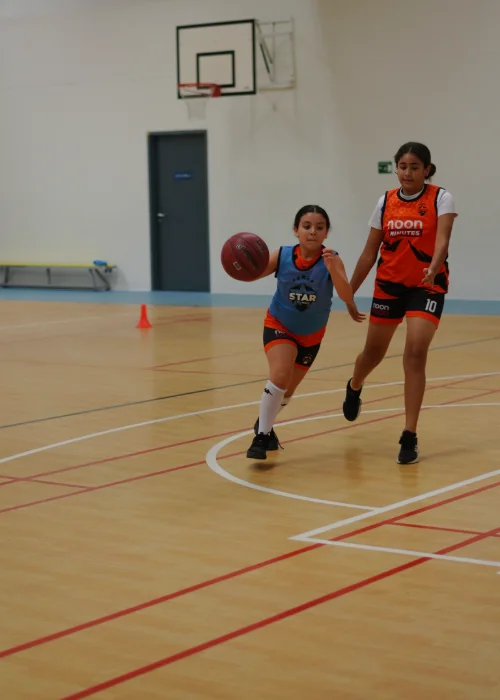
Basketball Gives Friendship Something Meaningful to Do
Friendships often form when people spend time together. In basketball, that time has structure and purpose. Girls pass to one another, defend together, solve problems and share responsibility for the next possession. Their connection is built through action.
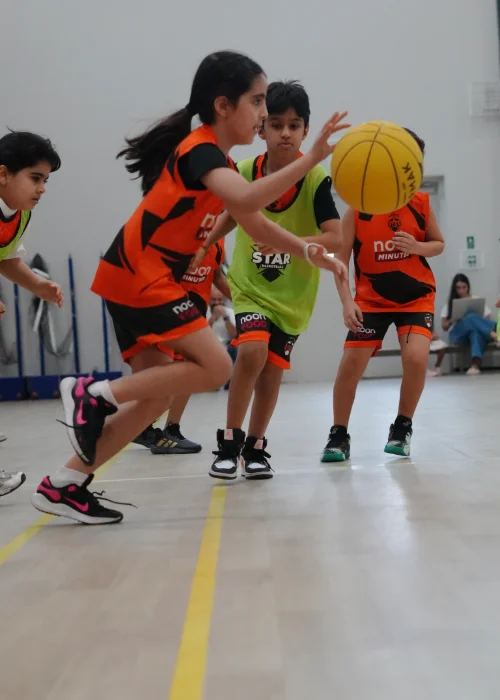
“Girls who play together, grow together” describes a relationship between social belonging and player development. A teammate can make training more enjoyable, but she also becomes part of the challenge. She asks for the pass, provides defensive help, expects effort and shares honest moments after both success and disappointment.
For parents looking for a girls’ basketball team in Dubai, this combination matters. A purely social activity may not provide enough sporting progression. A highly technical programme with a weak culture may struggle to retain girls. The strongest environment treats friendship, teamwork and coaching quality as complementary.
Star Sport Academies offers girls-only basketball for ages 4–18 in Dubai. Within that structure, regular training and team play can give girls the repeated contact needed for relationships and basketball understanding to develop together.
Why Teammates Can Make Sport Easier to Continue
Starting an activity often depends on curiosity. Continuing through months and seasons usually requires more. Progress is important, but belonging can be equally powerful.
A girl who knows that teammates expect her may feel more motivated to attend after a tiring school day. She has people to greet, a shared routine and a role that cannot be fully reproduced at home. Training becomes part of her social world.
This is especially significant when skill development becomes difficult. Every player experiences plateaus, mistakes and games that do not go as hoped. Teammates show that those experiences are normal. They can offer encouragement, humour and perspective.
Belonging should never become dependence on one friend. A healthy team helps girls build several connections and become comfortable participating even when a particular teammate is absent. Coaches can support this by rotating pairs, mixing groups and creating shared responsibilities.
A Girls-Only Group Makes Participation Visible
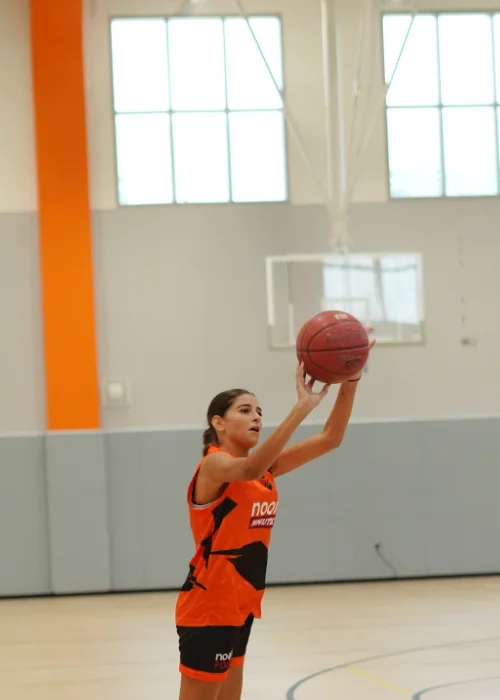
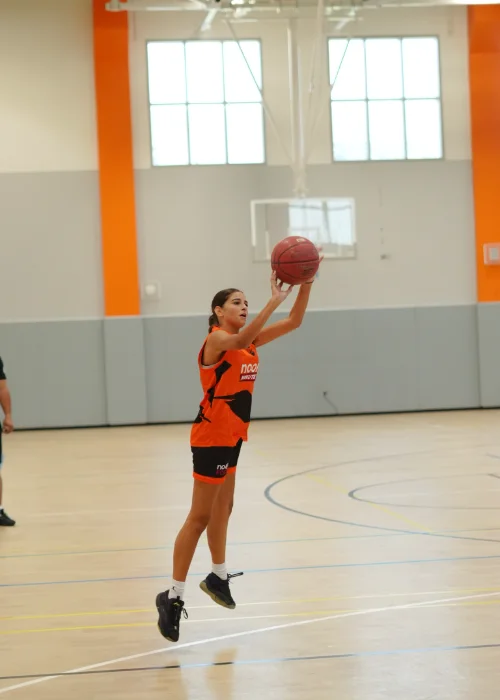
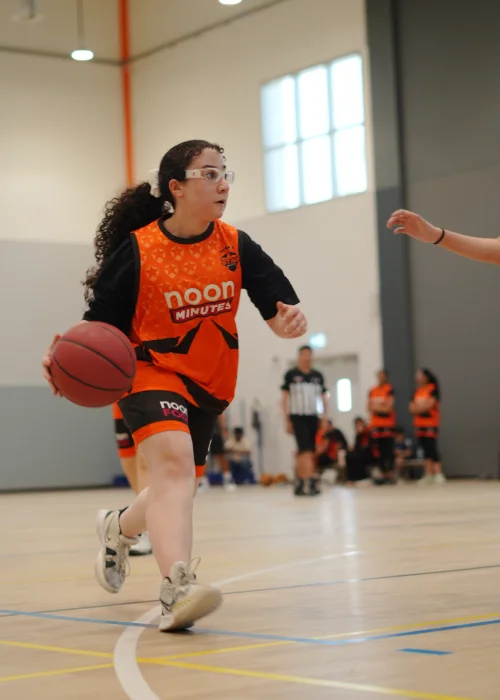
In a girls-only basketball programme, girls see one another holding every role on the court. They bring up the ball, take shots, organise defence, rebound, lead warm-ups and respond to pressure.
That visibility changes the social message. Basketball is not presented as an activity girls are occasionally allowed to join. It is clearly their programme, with their development at the centre.
New players can find role models close to their own age and experience. A beginner may watch a teammate execute a skill and think, “I could learn that,” because the example feels reachable. Older girls can understand that their behaviour shapes the environment younger players will inherit.
A girls-only label is not enough by itself. The programme still needs clear coaching, appropriate groups and respectful standards. Its potential lies in combining those qualities with a community where female participation is normal and sustained.
Friendship Begins With Inclusion
Established teams can feel welcoming from the inside and difficult to enter from the outside. Coaches therefore need to treat inclusion as a deliberate practice.
When a new player arrives, the coach should greet her, introduce her and explain the first activity. Pairing her with a reliable teammate can make the session less uncertain. Rotating partnerships prevents fixed friendship circles from controlling participation.
Players can be taught simple inclusive behaviours:
- use teammates’ names;
- make eye contact and offer a passing option;
- explain a task without making someone feel inadequate;
- invite rather than ignore a newcomer;
- celebrate team contributions; and
- respond constructively after mistakes.
These behaviours are small, but repetition turns them into culture. A girl begins to feel that her presence is expected rather than merely tolerated.
Teamwork Is a Basketball Skill
Teamwork is sometimes discussed as an extra benefit of sport. In basketball, it is part of performance itself.
The court is limited in size, so players must coordinate spacing. One girl’s movement changes the options available to everyone else. An off-ball cut may open a driving lane. A screen may create a shot. A help defender may stop an opponent, but another teammate must rotate to cover the space left behind.
Girls learn to connect individual actions with collective consequences. Keeping the ball too long can close opportunities. Passing without moving can make the attack static. Failing to communicate can turn a manageable defensive situation into an open basket.
This understanding grows through purposeful practice. Coaches can use small-sided games, guided rules and questions to help players see how cooperation changes the outcome. Teamwork becomes something girls can observe and improve, not simply a demand to “play nicely.”
Communication Builds Connection and Performance
Basketball requires frequent information. Players call names, signal availability, warn about screens, organise matchups and support one another during transitions.
For a girl who is hesitant to speak in a group, these practical cues provide a manageable entry point. She does not need to deliver a speech. She begins with one useful word at the right time.
As confidence grows, communication can become more detailed. Players discuss what happened in a possession, suggest an adjustment or help organise the team. They also learn to listen, because useful information may arrive while they are concentrating on another task.
Coaches should distinguish communication from noise. Constant shouting is not the goal. Information should be relevant, timely and respectful. Girls discover that their voice carries responsibility: it can clarify, encourage or distract.
Trust Is Built Through Repeated Possessions
Trust in a team is not created by one speech. It grows when players repeatedly act in ways their teammates can rely on.
A guard trusts that a teammate will move into the correct passing lane. A defender trusts that help will arrive if she is beaten. A rebounder trusts that others will transition when possession is secured. Each successful connection strengthens shared understanding.
Trust also includes emotional reliability. A girl needs to know that one turnover will not make teammates reject her. She should be accountable for recovering and learning, while the group remains focused on the next play.
Coaches build this form of trust by applying standards fairly. They avoid public blame, recognise unselfish actions and teach players how to resolve frustration. Over time, girls become more willing to take appropriate risks because they do not feel alone inside the result.
Healthy Competition Can Strengthen Friendships
Friends do not need to avoid competing. In fact, constructive competition can help girls grow.
Teammates may defend one another in practice, compete for a rebound or challenge each other’s speed. The intensity raises the standard when players understand that the aim is mutual improvement.
Problems arise when competition becomes personal status, exclusion or ridicule. Coaches must establish boundaries. Effort can be celebrated without humiliating the player who lost a drill. Roles and selection should be communicated responsibly. Stronger players should not be allowed to dominate every possession at the expense of team learning.
Girls can learn that an opponent in practice is also a partner in development. She makes the task difficult enough to be valuable. After the contest, both return to the shared objective.
This ability to compete and remain connected is an important team skill.
Players Need Roles Beyond Scoring
Basketball statistics can make points highly visible. If scoring becomes the only recognised contribution, many girls may feel peripheral even when they help the team significantly.
Coaches should highlight roles such as:
- organising the offence;
- making the extra pass;
- setting an effective screen;
- creating space without the ball;
- defending with discipline;
- communicating in transition;
- rebounding;
- protecting possession; and
- bringing consistent energy and focus.
Recognising different contributions gives each girl a clearer way to belong. It also develops more complete players. A leading scorer learns that she still owes the team defensive effort; a player who scores less understands that her actions can change the game.
Roles should remain flexible, especially with young players. Early labels can limit development. Girls need opportunities to handle the ball, make decisions and explore different responsibilities.
Shared Challenges Create Strong Memories
Teams grow through challenges as much as celebrations. Learning a difficult concept, preparing for a game or recovering after a loss gives girls a shared story.
The coach’s response shapes the meaning of these moments. A difficult result can become blame, or it can become information. The group can review what happened, identify controllable actions and return to training with a clearer purpose.
Winning also requires guidance. Girls should enjoy success without disrespecting opponents or assuming the result proves permanent superiority. Humility keeps the team ready to learn.
Shared experience creates memories that deepen connection: the first completed play, a teammate’s breakthrough, a brave comeback or the moment a nervous beginner joins a game. These moments cannot be manufactured through forced bonding. They emerge from participating together.
Coaches Are Architects of the Team Environment
Friendships belong to the players, but coaches create the conditions around them.
A coach sets the tone by arriving prepared, using names, applying rules consistently and showing respect under pressure. Session design can either encourage cooperation or allow the same girls to control every action.
Small groups increase interaction. Rotated roles broaden relationships. Team problems require communication. Reflection helps girls recognise how their behaviour affects others.
Coaches must also notice exclusion, bullying or repeated conflict. Telling children simply to solve everything themselves may leave vulnerable players unsupported. Intervention should be calm, proportionate and connected to clear standards.
The coach is not responsible for making every girl best friends. The responsibility is to ensure that all players can learn and participate in a respectful team environment.
The Role of Parents in Team Culture
Parents influence the community from beyond the court. Their comments about teammates, coaches, officials and results can either strengthen or weaken the standards girls are learning.
Supportive parent behaviour includes:
1. Encouraging punctuality and attendance. 2. Allowing the coach to give technical instructions. 3. Treating all players and families respectfully. 4. Avoiding comparison and gossip. 5. Praising teamwork as well as individual statistics. 6. Using the correct communication channel for concerns. 7. Keeping one game in perspective.
Children notice when adults blame others after a loss. They also notice when parents congratulate the team, acknowledge effort and respect an opponent.
Families do not need to become socially close for the team to function. Courtesy, reliability and shared support for healthy participation are enough to create a strong foundation.
Friendship Across a Diverse Dubai Community
Dubai teams often bring together girls from different nationalities, languages, schools and basketball backgrounds. The court gives them an immediate shared task.
Clear demonstrations and consistent terminology help when language confidence varies. Coaches can organise mixed pairings and avoid allowing cultural or school groups to become permanent divisions.
Girls learn that teammates may communicate differently, celebrate differently or bring different expectations. They practise patience and discover common ground through action.
Sport does not remove every social difference, but it creates repeated reasons to cooperate. A pass becomes a simple act of trust between two players who may not otherwise have met.
This diverse environment can make a girls’ basketball community in Dubai especially rich when inclusion is managed thoughtfully.
Social Growth Looks Different by Age
Ages 4–18 cover many stages of development. The meaning of teamwork and friendship changes across them.
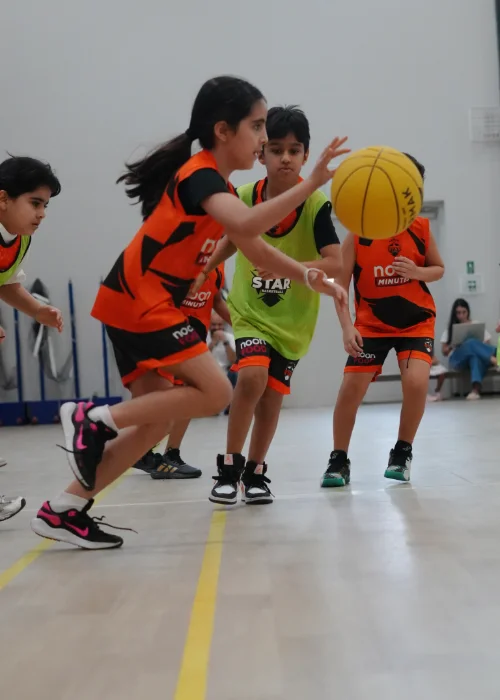
Young children may begin by learning to take turns, share equipment, follow simple group instructions and recognise teammates. Their friendships can be immediate and change quickly.
Middle age groups become more aware of comparison, roles and peer acceptance. Coaches need to create fair participation while teaching girls to handle competition constructively.
Teenagers may value team identity deeply while balancing school demands and changing social relationships. They can take greater responsibility for communication, leadership and welcoming younger or newer players.
Coaches should avoid treating every conflict as identical. Responses need to reflect maturity while keeping core expectations—respect, inclusion and responsibility—consistent.
What If Her Friend Leaves?
Some girls join because of one friend. That can be a helpful doorway, but the programme should gradually build wider belonging.
Coaches can rotate activities so players know the whole group. Parents can encourage their daughter to learn names and focus on parts of basketball she personally enjoys. As skill and confidence grow, participation gains reasons beyond one relationship.
If a friend leaves, acknowledge the disappointment. Then help the player identify what remains: other teammates, a coach she trusts, a skill target, games and her own progress.
The aim is not to dismiss friendship. It is to help her understand that she has an independent place on the team.
When Friendship Problems Arise
Teams are not free from conflict. Girls may disagree, feel excluded or become frustrated over roles. A healthy programme does not pretend these moments never happen.
Players can be taught to describe the issue, listen, take responsibility and agree on the next behaviour. Coaches should intervene when necessary, particularly when patterns involve bullying, discrimination or safety.
Parents should gather information before escalating. A child’s feeling is real, even when the situation has multiple perspectives. Calm communication with the academy helps establish what occurred and what action is appropriate.
Not every uncomfortable interaction requires changing teams immediately. Managed conflict can teach valuable repair. Persistent harmful behaviour, however, should never be excused as normal competitiveness.
Real Games Deepen Team Understanding
Training builds relationships, while games test them. Under pressure, girls discover whether they communicate, cover one another and remain connected after mistakes.
Real competition gives team roles meaning. A player learns why spacing matters when defenders close in, why transition communication matters after a turnover and why the bench remains engaged.
Star’s approved girls’ basketball positioning includes real games and competition as part of development when players are ready. Families should confirm the opportunities for the relevant group, as formats and schedules can differ.
Coaches can use games to strengthen culture by setting team process goals and giving every player a meaningful understanding of her role. Post-game reflection should include cooperation and decision-making, not only the final score.
Growth That Parents Can See
The social development created through basketball often appears in ordinary moments. A girl begins greeting teammates without prompting. She communicates more clearly on court. She encourages someone after a missed shot. She accepts feedback without withdrawing.
Basketball growth may appear when she makes the extra pass, understands spacing, rotates defensively or takes responsibility for preparation. These improvements are connected: greater trust can make her more willing to pass, while greater skill can make her more confident contributing to the group.
Progress is not linear. A new team, growth spurt, difficult game or friendship change may temporarily affect participation. Coaches and parents should observe patterns over time rather than define the journey by one week.
No programme should guarantee a particular personality change. It can provide repeated, supported opportunities to practise connection, communication and responsibility.
Choosing a Girls’ Basketball Community in Dubai
During a trial, families should look beyond whether the group appears cheerful. Ask whether the social environment also supports learning.
Observe:
- how new girls are welcomed;
- whether established friendship groups exclude others;
- how players respond to mistakes;
- whether the coach rotates partnerships and roles;
- whether all girls receive meaningful involvement;
- how competition is managed;
- whether feedback is respectful and specific;
- whether teamwork is taught in basketball terms; and
- whether safeguarding and communication procedures are clear.
Ask your daughter how she felt with the group, but also what she learned. The ideal programme offers both connection and progression.
Practical fit supports belonging. A location and schedule the family can sustain allow relationships to develop consistently.
Girls’ Basketball for Ages 4–18 in Dubai
Star Sport Academies offers structured girls-only basketball for ages 4–18 in Dubai. The programme’s approved positioning includes skill development, team play and progression into real games and competition when appropriate.
A trial lets a girl experience the actual group. She can meet teammates, follow the coach and participate in basketball activities. Parents can ask about placement, schedule, match opportunities and the pathway ahead.
Current venue, fee, timetable and trial information should always be confirmed directly with Star Sport Academies before enrolment.
Grow Her Game and Her Circle
Basketball friendships are valuable because they are attached to shared effort. Girls do not only stand beside one another; they learn to depend on one another.
They grow as players when teammates create better challenges. They grow as teammates when basketball requires communication and trust. They grow in confidence when their contribution matters to the group.
No team experience is perfect, and no friendship can be guaranteed. What a purposeful programme can create is a consistent court where connection has room to develop and where girls learn how to make a group stronger.
That is how playing together can become growing together.
Book a Girls’ Basketball Trial in Dubai
Help your daughter discover a team where basketball development and belonging happen together. Contact Star Sport Academies for current information and request a girls’ basketball trial for ages 4–18 in Dubai.
Explore the Girls’ Basketball programme, check the basketball locations and timetable, or book a girls’ basketball trial.
Current Supplied Venues
Basketball network
- Al Barsha
- RIT–DSO
- Ashmount School
- Jumeirah–JBS
- Mirdif Uptown School
- Al Khaleej Al Warqa
- South School
- Sharjah
- Al Qusais
Please note: These locations belong to Star’s wider basketball network. Contact Star to confirm which venues currently host girls-only basketball groups, age groups and trial sessions.
Frequently Asked Questions
Can my daughter join without knowing anyone?
Yes. Tell the academy that she is new so the coach can introduce her and recommend an appropriate group. Deliberate welcome and rotated activities should help her connect beyond existing friendships.
Is a girls’ basketball team suitable for a shy child?
It can provide gradual, practical opportunities to communicate and contribute. Outcomes vary, so she should be supported patiently rather than pressured to become immediately outgoing.
Does Star offer girls-only basketball groups?
Yes. The approved programme is girls-only basketball for ages 4–18 in Dubai, subject to current scheduling and availability.
Do friendships distract from serious training?
They do not have to. A strong coach uses team connection to support attendance, communication and accountability while maintaining clear learning standards.
What if teammates have different ability levels?
Coaches can adjust groups, rules, space and individual tasks. Players need suitable challenge, and placement should reflect age, experience and development needs.
How can parents support a healthy team culture?
Respect coaches, officials, opponents and other families; value teamwork; avoid comparison; and use appropriate channels for concerns.
Are real games part of the programme?
Star’s approved positioning includes progression into real games and competition when girls are ready. Confirm the format and schedule for your daughter’s specific group.