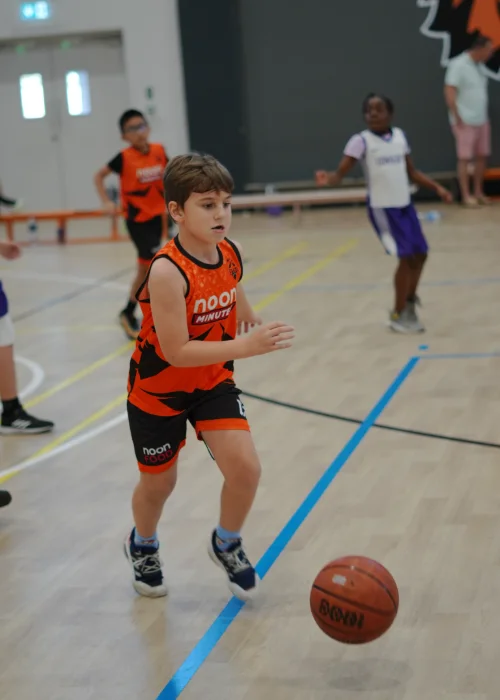
Good Basketball Players Are Built in Training
Game day is where basketball skills become visible, but the work begins much earlier. A confident dribble, balanced shot or well-timed pass is created through repeated practice, thoughtful coaching and opportunities to make decisions.

Parents searching for a basketball academy in Dubai or Sharjah often see similar promises: improve skills, build confidence and learn from experienced coaches. The important question is how the programme turns those promises into a weekly learning process.
At Star Basketball Academy, every session can build a specific part of a child’s game. Shooting, ball handling, movement and game understanding are not taught as disconnected tricks. They become parts of a player who can recognise situations and contribute to a team.
The programme serves boys and girls aged 4 to 18 across Dubai and Sharjah, from children holding a basketball for the first time to players preparing for stronger competitive challenges.
Building a game does not happen in one dramatic moment. It happens when purposeful practice becomes a habit.
What Does It Mean to “Build Your Game”?
A basketball player’s game is the combination of skills, decisions, movement, confidence and team understanding the player can use under pressure.
It is possible to perform a dribbling pattern in an empty space without being able to protect the ball from a defender. A player may shoot accurately in practice but rush when the score is close. Another may possess strong individual technique while struggling to recognise an open teammate.
Building the game means connecting these pieces.
Technical ability gives players options. Awareness helps them see which option is available. Decision-making helps them choose. Movement and physical coordination support execution. Confidence allows the player to act.
A structured youth basketball programme develops each area progressively. The objective is not to make every child play in the same style. It is to give each child stronger tools and a clearer understanding of when to use them.
Ball Handling: Control Before Complexity
Ball handling is one of the first skills young players want to learn. It can also become an area in which flashy movement distracts from practical control.
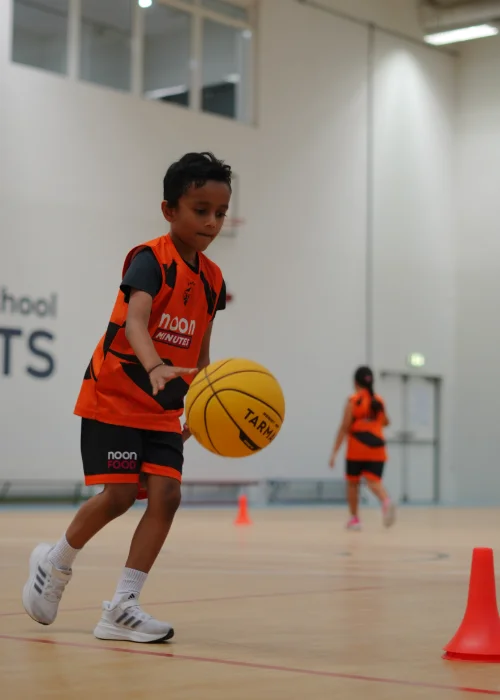
Beginners need to become comfortable bouncing the ball, changing hands and moving without constantly looking down. They learn an athletic stance and discover how hand position affects the dribble.
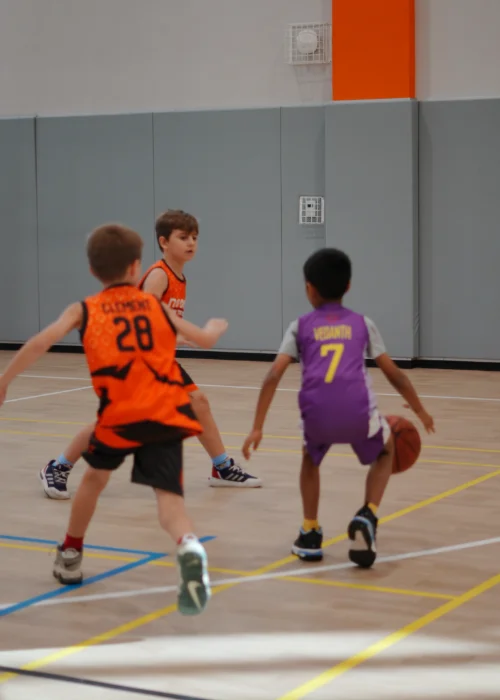
As control improves, players can work on changes of direction, pace and height. They learn to use the body to protect the ball and move away from defensive pressure.
Advanced combinations have value when they solve a real problem. The purpose of a crossover is not to complete a pattern for its own sake. It is to shift a defender and create space.
Good basketball coaching links technique to context. Players practise the movement, then use it against increasing pressure and finally make decisions inside a game.
Passing: A Skill That Connects the Team
Passing may receive less attention than scoring, but it determines how effectively a team can move the ball.
Young players learn chest, bounce and overhead passes, along with the footwork and body position required for accuracy. They also need to understand timing, distance and the movement of the receiver.
A technically accurate pass can still be a poor decision if a defender is waiting. Players therefore learn to scan, recognise an advantage and select a suitable passing route.
Passing practice should include movement. The receiver may cut into space while the passer responds to pressure. The action becomes communication between teammates rather than an isolated throw.
Coaches can help players value the pass that creates the next advantage, not only the final assist.
Shooting: Technique, Balance and Decision-Making
Children naturally enjoy shooting. Structured coaching helps that enthusiasm become repeatable technique.
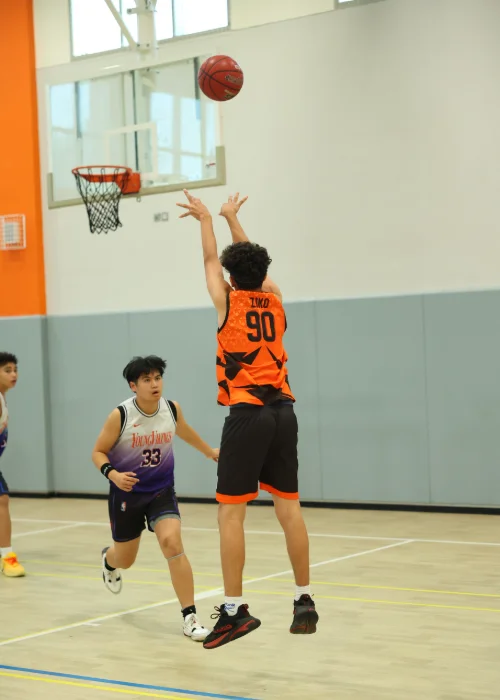
Young players can develop balance, alignment and a controlled release without being overloaded by adult-level detail. The basket height, ball size and distance should suit the age and programme environment where possible.
Repetition builds familiarity, but shooting development also requires variety. Players may catch and shoot, finish after a dribble or respond to a defender. Footwork changes according to the situation.
Shot selection matters too. A player must recognise when the attempt is available and when a pass or drive creates a better option.
Coaches should evaluate the process, not only whether the ball goes in. A well-balanced attempt can miss; an unbalanced throw can occasionally score. Feedback should reinforce habits that support long-term consistency.
Movement Without the Ball
One basketball is shared by several players, so most of the game happens without possession.
Young athletes learn to create space, cut, screen, relocate and provide passing angles. Defensively, they position themselves between an opponent and the basket, communicate and react when the ball moves.
Players who understand movement remain involved even when they are not dribbling or shooting. They make the team easier to play with.
This area can be overlooked when training focuses only on individual ball skills. A complete basketball academy connects personal technique to coordinated team movement.
Small-sided games are especially useful because each child faces frequent decisions with and without the ball.
Footwork: The Foundation Under Every Skill
Effective basketball begins with the feet. Starting, stopping, pivoting, changing direction and maintaining balance influence almost every action.
Footwork helps a player protect the ball, create a passing angle, defend without reaching and prepare to shoot. Poor balance can weaken otherwise good technique.
Young players benefit from varied movement challenges that develop coordination. Coaches can introduce legal pivots, jump stops and changes of pace gradually.
Footwork should not remain trapped in lines and cones. Players need to use it while reading defenders, teammates and court space.
The objective is efficient movement that serves the game—not a performance of memorised steps.
Game Understanding: Knowing Why and When
Basketball changes quickly. Players transition from attack to defence in seconds. Space opens and closes as ten people move.
Game understanding allows a child to recognise these changes. Should the team move quickly before the defence is organised? Is there space to drive? Where should a player move after passing? Who needs defensive help?
Coaches develop understanding by creating realistic problems and asking useful questions. They may adjust numbers, space or rules to highlight a principle.
Players need freedom to make choices and experience outcomes. If the coach gives every answer from the sideline, children may execute instructions without learning to read the game.
The strongest player is not always the one with the most complicated skill. Often it is the player who understands what the moment requires.
Why Purposeful Drills Matter
A drill becomes useful when it has a clear relationship to basketball performance.
Coaches should be able to explain the purpose: improving control while changing direction, creating a balanced shooting base, passing out of pressure or reacting after losing possession.
The drill then needs progression. Players may begin without opposition to understand the movement. A passive defender introduces information. Live pressure requires a decision. A game provides transfer.
Repeating the same comfortable action for too long can create an illusion of mastery. Appropriate challenge reveals whether the player can use the skill.
Purposeful training does not eliminate fun. A clear objective can be delivered through competitions, games and creative tasks that keep children engaged.
Feedback Young Basketball Players Can Use
Real feedback is specific and timely.
“Good job” encourages but does not identify what succeeded. “You stopped under control and found the open teammate” gives the player a behaviour to repeat.
Corrective feedback should offer a next action. A coach may ask a player to lower the dribble under pressure, adjust the angle of approach or look before beginning a drive.
Too many corrections at once can overwhelm a child. Coaches should prioritise the detail that matters most for the session or individual target.
Players also benefit from self-reflection. A simple question—“What did the defender give you?”—can help the child connect observation with choice.
The long-term goal is a player who can learn and adjust independently.
Structured Sessions for Different Ages
Basketball training should change as children grow.
Ages 4–7: movement, enjoyment and early control
Young children need frequent activity, simple language and suitable equipment. Sessions can build coordination, stopping, changing direction and basic ball familiarity through playful challenges.
Waiting in long lines is especially unhelpful. Every child should receive many opportunities to move and touch the ball.
Ages 8–12: stronger foundations and simple decisions
Players can refine handling, passing, shooting and defensive movement while learning spacing and teamwork. Small-sided games increase involvement and help skills transfer.
Coaches can introduce more specific feedback without removing creativity.
Ages 13–18: performance under pressure
Older players may need position-related skills, tactical understanding, increased intensity and preparation for real competition. Technique must remain reliable under time and defensive pressure.
They can take greater ownership of goals and performance review.
Age bands are a guide. Experience, physical development and confidence also affect the right challenge.
Beginners Need a Strong First Experience
A beginner does not need to become skilled before joining an academy. The academy should provide the environment in which foundations can grow.
Early sessions should create success without pretending the game is easy. Players can use manageable spaces and simple choices. Coaches demonstrate clearly and encourage questions.
New children also need social support. Learning names, finding a partner and understanding routines can be as important as the first technical point.
Comparison with experienced players should not define the experience. Progress begins from the child’s own starting point.
A positive first trial can replace uncertainty with curiosity: “I want to try that again.”
Developing Players Need Increasing Pressure
Once a player controls a skill in a simple task, the environment should become more realistic.
Space can shrink. A defender can become active. The player may need to choose between passing, driving and shooting. Time may become limited.
Pressure should expose the next learning need, not create chaos. If a task repeatedly breaks down before players can practise the objective, the coach can simplify and rebuild.
Developing players also need real games. Competition reveals whether skills survive changing speed and emotion.
The cycle continues: practise, apply, review and refine.
Building Both Sides of the Game
Young players often focus on offence because scoring is visible. A complete programme develops defence too.
Players learn stance, balance, positioning and how to move without crossing the feet unnecessarily. They practise containing the ball, seeing both player and basket, helping teammates and finishing a defensive possession with a rebound.
Defence teaches effort and responsibility, but it is also a thinking skill. Reaching constantly may show that a player is late or poorly positioned.
Coaches should explain defensive purpose rather than rewarding aggression alone. Safe, legal and intelligent movement matters.
Balanced development gives every player more ways to contribute.
Confidence Comes from Growing Competence
Basketball can feel difficult at first. The ball is large, the basket is high and several skills happen at once.
Structured progression breaks the challenge into achievable steps. A child learns to stop under control, then receive, turn and pass. Each success becomes evidence of capability.
Confidence also grows when coaches make mistakes safe. A player who attempts the correct decision but misses the pass should receive guidance, not ridicule.
Specific feedback helps children connect effort with improvement. They understand that skill is built rather than fixed.
This form of confidence is more durable than praise based only on talent.
The Role of Competition in Building a Game
Drills are practice. Games show whether learning transfers.
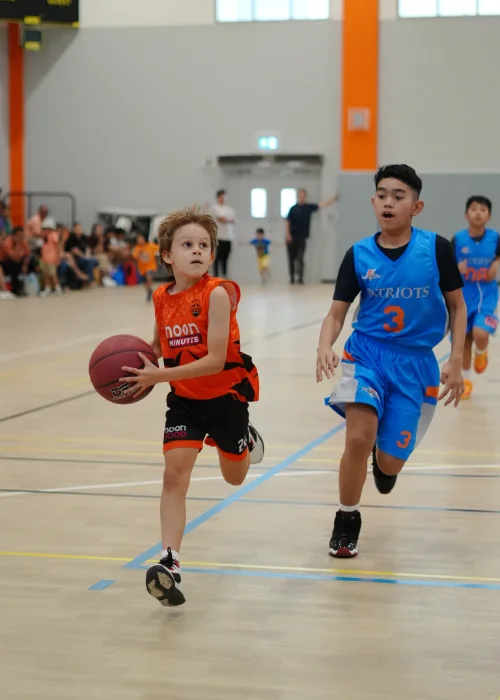
Real, refereed competition introduces pressure, teamwork and decisions that cannot be fully scripted. Players discover which skills remain reliable and where habits break down.
Competition should suit the child’s stage. Beginners may start with small internal games. Developing players can progress to stronger fixtures and teams when ready.
The result matters to players, but coaches should assess more than the score. Did the athlete use the skill being developed? Did decisions improve? How did the player respond after a mistake?
Match observations should return to training and shape the next priorities.
How Parents Can Support Skill Development
Parents do not need to become technical coaches.
Ask children what they worked on and what felt challenging. Encourage regular attendance and allow the academy’s coaching language to remain consistent.
Informal practice can help when the child wants it. A safe few minutes of ball handling or form shooting may increase repetition. Quality matters more than forcing long sessions.
Avoid measuring progress only through points scored. Notice movement, passing, defence, communication and decision-making.
On game day, encourage rather than instruct. Children need to read the court, not wait for commands from the stands.
Choosing a Basketball Academy in Dubai or Sharjah
Families should evaluate method, culture and practical fit.
During a trial, observe how active players are, whether drills connect to games and how coaches respond to different abilities. Ask how groups are organised and how players progress.
Look for specific feedback and respectful standards. A strong player should be challenged; a beginner should remain included.
Confirm the current venue, schedule and age group directly. A practical location supports consistency.
Do not rely on a promise of instant transformation. Ask the academy to explain how weekly sessions build a player over time.
Signs That Your Child’s Game Is Developing
Progress appears in habits.
A player begins dribbling with the head higher, stopping under balance or using the weaker hand. Passing decisions become quicker. The child moves after releasing the ball instead of watching.
Defensive positioning may improve before steals increase. Shooting technique may become more repeatable before percentages rise.
The player may communicate more, explain a training objective or recover from mistakes with greater composure.
These changes are evidence that the child is not simply attending basketball. The game is being built.
Start Building from the First Dribble
Every basketball player begins with skills that feel unfamiliar. Development comes from clear instruction, purposeful repetition, realistic decisions and feedback the child can apply.
Star Basketball Academy offers age-group training for boys and girls aged 4 to 18 across Dubai and Sharjah. From first dribble to competitive play, sessions can build shooting, handling, movement and game understanding in a connected programme.
The objective is not to collect drills. It is to create a player who can use skills with confidence and purpose.
Build the technique. Build the understanding. Build your game.
Book a Basketball Trial
Book a trial with Star Basketball Academy and let your child experience purposeful youth basketball coaching. Contact the academy to confirm the most suitable age group, venue and current schedule in Dubai or Sharjah.
For current programme information, visit Star Basketball Academy, check the basketball locations and timetable, or book a basketball trial.
Current Supplied Venues
Basketball
- Al Barsha
- RIT–DSO
- Ashmount School
- Jumeirah–JBS
- Mirdif Uptown School
- Al Khaleej Al Warqa
- South School
- Sharjah
- Al Qusais
Please note: Venue schedules and age-group availability can change. Contact Star Basketball Academy to confirm the exact venue name, current group and trial time.
Frequently Asked Questions
What age can children join Star Basketball Academy?
The approved campaign information covers boys and girls aged 4 to 18. Confirm current groups and venue availability directly with the academy.
Is the basketball academy suitable for beginners?
Yes. A structured programme can introduce movement and ball control gradually while giving experienced players greater pressure and complexity.
What skills should young basketball players learn?
Important foundations include ball handling, passing, shooting, footwork, movement without the ball, defence, rebounding and game decision-making.
How does a child improve basketball shooting?
Players need suitable technique, balance, age-appropriate repetition, varied situations and feedback. Shot selection and footwork are also important.
Are basketball sessions available in Dubai and Sharjah?
The supplied campaign brief identifies age-group provision across Dubai and Sharjah. Confirm the latest locations and times before booking.
Does Star Basketball Academy provide real games?
The source campaign describes real, refereed games as part of development. Ask about current competition opportunities for the relevant group.
What should parents observe during a basketball trial?
Look for active participation, clear objectives, age-appropriate challenges, useful feedback, respectful coaching and a progression from technique into decisions and games.