Every Drill Should Have a Reason
A busy basketball session is not automatically a productive one. Children can run, dribble and shoot for an hour without understanding what they are working to improve.

Purposeful coaching begins with a clear objective. The coach chooses activities because they help players solve a particular basketball problem. Feedback relates to that objective, and the session progresses towards realistic decisions.
For parents comparing youth basketball coaching in Dubai or Sharjah, this is a valuable standard. Ask what the players are learning, not only whether they look active.
At Star Basketball Academy, boys and girls aged 4 to 18 train through structured sessions across Dubai and Sharjah. Planned training blocks, clear coaching points and individual guidance can support beginners and competitive players alike.
Training with purpose means that time on court leads somewhere.
What Purposeful Basketball Coaching Means
Purposeful coaching connects intention, activity, observation and feedback.
The intention defines the learning problem. An activity gives players repeated opportunities to experience it. The coach observes how they respond and adjusts the task or feedback. Players then apply the idea under pressure.
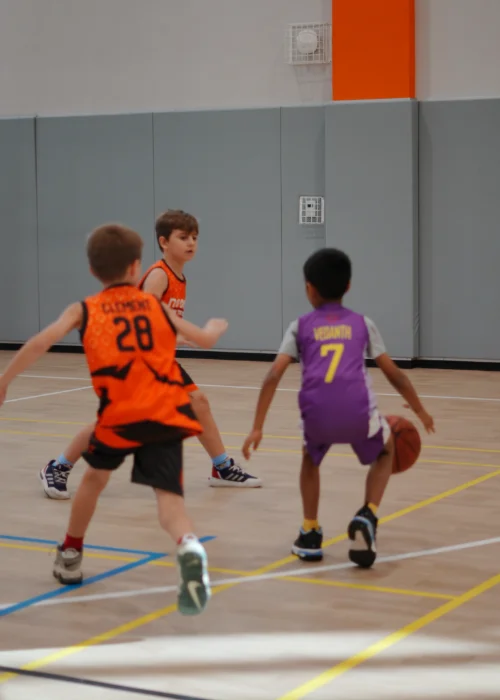
Suppose the objective is attacking a closeout. Players may first practise balanced footwork and reading the defender’s approach. A guided activity adds choices between shooting, driving and passing. A small-sided game requires the decision in context.
The session remains flexible. If players need more clarity, the coach simplifies. If they succeed too easily, pressure increases.
Structure does not mean controlling every movement. It creates the conditions in which players can learn.
Planning Across More Than One Session
Basketball development rarely happens in a single hour.
Training blocks allow a theme to grow across several sessions. One week may introduce spacing. The next adds cutting and passing. Later sessions apply the principles against stronger defensive help.
Continuity creates depth. Players meet the same idea in different situations rather than memorising one drill.
Coaches can also respond to games. If the team repeatedly loses balance during transition, the next block can address decisions and recovery.
A programme should not feel identical every week, but variety should serve development. Random novelty can be entertaining without building reliable habits.
A Strong Session Starts Before Players Arrive
Preparation protects learning time.
The coach considers group size, age, ability, space and equipment. Courts and stations are organised so transitions remain quick. Activities include ways to support or challenge different players.
Safety and hydration are considered, especially in the UAE environment. Instructions and demonstrations are planned for the group’s age.
The coach also identifies what to observe. If the objective is passing under pressure, attention may focus on body position, vision and timing rather than every technical detail.
Preparation allows the coach to become responsive during the session instead of improvising basic organisation.
The Warm-Up Should Connect to Basketball
A purposeful warm-up prepares the body and attention for the session.
Young players may use movement games that develop stopping, changing direction and coordination. Older players can rehearse basketball footwork and gradually increase intensity.
Ball involvement can create more useful repetition. A warm-up for a handling session may include changes of pace and direction. One for defensive movement may prepare stance and lateral control.
This does not require every warm-up to be complicated. It needs a reason.
Long laps or punishment running rarely prepare players as effectively as age-appropriate movement connected to the game.
Technical Practice with a Clear Coaching Point
Technical foundations need repetition, but players should know what quality looks like.
A handling activity may emphasise control and vision. A passing task may focus on timing and accuracy. Shooting practice may prioritise balance.
The coach selects a small number of clear points. Too much information overwhelms children and reduces activity.
Demonstration can show the movement, while questions help players notice important details. The coach then observes and provides brief feedback.
Practice should progress. Once the skill becomes comfortable, movement, pressure or decisions make it more realistic.
From Technique to Decision
Basketball skills do not happen in isolation during games.
A player chooses whether to dribble, pass or shoot based on defenders, teammates, space and time. Purposeful training therefore includes perception and decision-making.
Coaches can introduce a defender, multiple targets or numerical advantages. The player must see information and choose.
The task should still create frequent opportunities to work on the objective. If it becomes a chaotic full game too quickly, learning may disappear.
The bridge from technique to decision is where practice begins to become performance.
Why Small-Sided Games Are Valuable
Small-sided games involve fewer players and can increase touches and decisions.
A two-on-two or three-on-three situation makes spacing, support and defensive responsibility visible. Children cannot easily hide from involvement.
Coaches can shape the game to emphasise a theme while preserving genuine choice. A scoring condition may reward paint touches, quick ball movement or successful defensive recovery.
Conditions should not remain longer than useful. The final aim is flexible basketball, not dependence on artificial rules.
Small-sided play combines competition, enjoyment and purposeful repetition.
Feedback That Players Can Apply
Feedback should tell a player what happened and what to try next.
“You stopped under control and created two options” identifies successful behaviour. “Can you see the help defender before the second dribble?” directs attention without supplying the entire answer.
General shouting such as “focus” or “work harder” may affect energy but offers little technical guidance.
Timing matters. A coach can speak briefly while play continues, address the group during a natural pause or review after an activity.
Players need another attempt after feedback. Information without practice rarely changes a habit.
Individual Coaching Within a Group
Purposeful group sessions can still recognise individual needs.
One player may need a wider space to develop control. Another may face a stronger defender. Coaches can change pressure, roles and questions without separating everyone.
Individual targets give feedback continuity. A player knows the coach remembers the previous priority.
Attention should not only go to the strongest or most disruptive children. Quieter players need to be seen, and advanced players need meaningful challenge.
Group coaching succeeds when the shared task creates personal learning.
Why Coaches Should Not Control Every Possession
Constant instructions can make players dependent on the sideline.
Basketball requires athletes to read the court. If adults call every pass and shot, children have less opportunity to decide and review.
Good coaches choose interventions carefully. They may ask a question, alter a condition or let a sequence continue before discussing it.
Silence can be intentional observation. The coach sees whether learning transfers without prompting.
Beginners may need more direct guidance, while responsibility should increase with age and experience.
The goal is not merely obedient players. It is thinking players.
Positive Coaching and High Standards
Constructive coaching does not remove accountability.
Players can be expected to listen, prepare, maintain effort and treat teammates respectfully. Coaches can correct poor decisions and increase challenge.
The difference lies in communication. Public humiliation and fear may produce short-term compliance but discourage experimentation.
Players need permission to make basketball mistakes while learning. They also need clear standards for how they respond.
High expectations work best when children believe the coach wants them to improve.
Purposeful Coaching for Beginners
Beginners need simple objectives and frequent success.
A first handling session might focus on controlling the bounce and stopping safely. The coach uses clear demonstrations and short activities.
Pressure increases only after the child understands the task. Small games provide early decisions without demanding advanced tactics.
The social experience matters too. Coaches help new players learn names and routines.
Purpose for a beginner includes enjoyment. A child who returns willingly can continue building foundations.
Purposeful Coaching for Competitive Players
Experienced players need relevant complexity.
Technique must survive speed, contact and decision pressure. Training can include position-related situations, tactical reads and transitions.
The coach may use match observations to set priorities. A player who handles well in drills may need to make earlier decisions against help defence.
Older athletes can review film or performance information where appropriate and verified, but technology should support coaching rather than replace observation.
Intensity has value when it serves a basketball objective. Exhaustion alone is not proof of quality.
How Coaches Use Questions
Questions can guide attention and reveal understanding.
“Where was the space?” encourages observation. “What changed when the defender helped?” connects information to action.
Questions should be genuine and concise. If the coach only accepts one exact phrase, the interaction becomes a disguised lecture.
Younger players need simpler choices. Older players can explain tactical relationships.
The coach can then adapt based on the answer. A child may know the correct idea but need technical support to execute it.
Understanding and performance are connected but not identical.
Reviewing a Session
A short review helps players organise learning.
The coach may ask what the group practised, what created success and what remains difficult. Players can identify one point to carry forward.
Review does not require a long speech. Children are often tired and ready to leave. A focused summary is enough.
Coaches should also review their own delivery. Did the activities create the intended problem? Were players active? Who received limited feedback?
Reflective coaching improves future sessions.
How Parents Can Recognise Purposeful Training
Parents may notice several signs:
- Players are active rather than waiting in long lines.
- The coach can explain the session objective.
- Activities progress from simple execution to decisions.
- Feedback is specific and respectful.
- Different levels receive adjusted challenges.
- Skills appear in games.
- The child can describe what was learned.
One observation cannot reveal an entire programme. Look for patterns across time.
Questions to Ask a Basketball Coach or Academy
Parents can ask:
- How are training themes planned across the season?
- What is this group currently learning?
- How do activities progress into games?
- How is individual feedback provided?
- How are beginners supported and advanced players challenged?
- How do match observations influence training?
- What qualifications and youth-coaching experience do coaches have?
Claims about specific credentials should be verified before publication.
The Parent’s Role Around Purposeful Coaching
Parents can support consistency without duplicating the coach.
Ask the child about the session objective and feedback. Avoid giving a competing technical lesson during the journey home.
During games, encourage rather than calling every decision. The player may be working on a target that is not obvious.
If you have a concern, communicate through the academy’s appropriate channel. Focus on experience, learning and next steps.
Protect sleep, school and recovery. Purposeful development requires balance.
Choosing Youth Basketball Coaching in Dubai or Sharjah
A trial provides the strongest evidence.
Observe organisation, activity and communication. See whether players are challenged without becoming afraid of mistakes.
Ask how group placement works and what pathway follows. Confirm current venues and schedules directly.
The best local programme combines quality with logistics the family can sustain.
Avoid promises of instant transformation. Good coaches can explain a process, not guarantee a result.
Progress Parents Can See
Purposeful training produces changes in habits.
A player begins stopping under balance, looking up while dribbling or moving after passing. Defensive position improves. The athlete explains why one option was better.
Confidence becomes steadier because it rests on competence. The child responds to feedback and tries again.
Not every change appears in points scored. Team contribution and decision-making are meaningful evidence.
Look across a term or season rather than one session.
Make Every Session Count
Court time is valuable. It should not be filled with random activity or constant waiting.
Purposeful coaching gives every drill a reason, every player a relevant challenge and every session a connection to the game.
Star Basketball Academy offers structured coaching for boys and girls aged 4 to 18 across Dubai and Sharjah. Planned training, clear coaching points and real feedback help players develop from first dribble to competitive play.
Ask your child what was learned after a session. In purposeful training, there should be an answer.
Book a Purposeful Basketball Trial
Book a trial with Star Basketball Academy to observe a structured session and discuss the right group, venue and development pathway for your child.
For current programme information, visit Star Basketball Academy, check the basketball locations and timetable, or book a basketball trial.
Current Supplied Venues
Basketball
- Al Barsha
- RIT–DSO
- Ashmount School
- Jumeirah–JBS
- Mirdif Uptown School
- Al Khaleej Al Warqa
- South School
- Sharjah
- Al Qusais
Please note: Venue schedules and age-group availability can change. Contact Star Basketball Academy to confirm the exact venue name, current group and trial time.
Frequently Asked Questions
What makes basketball training purposeful?
Purposeful training has a clear objective, connected activities, progressive pressure, useful feedback and opportunities to apply learning in games.
Should every basketball drill include a defender?
No. Unopposed practice can introduce technique, but pressure and decisions should be added when players are ready.
How much feedback should a child receive?
Feedback should be specific and manageable. Too many corrections at once can overwhelm a player.
Is structured coaching suitable for beginners?
Yes. Structure helps simplify tasks, create early success and increase challenge gradually.
How can parents evaluate a basketball coach?
Observe communication, activity levels, task progression, individual attention, responses to mistakes and whether the coach can explain the learning objective.
Does Star Basketball Academy operate in Dubai and Sharjah?
The approved campaign brief covers both emirates for boys and girls aged 4 to 18. Confirm current locations directly.
What should my child learn in a basketball session?
The answer varies by training block, but the coach and child should be able to identify a technical, tactical, physical or team objective.