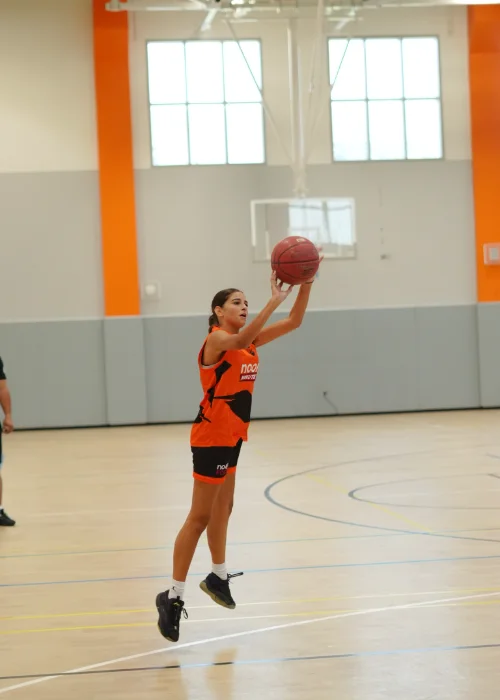
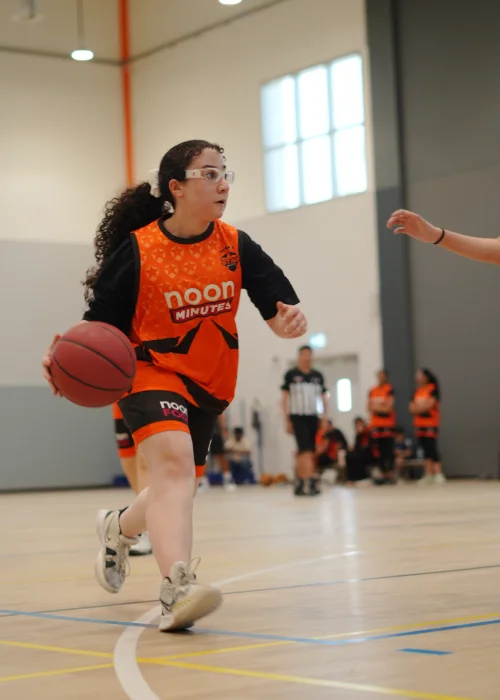
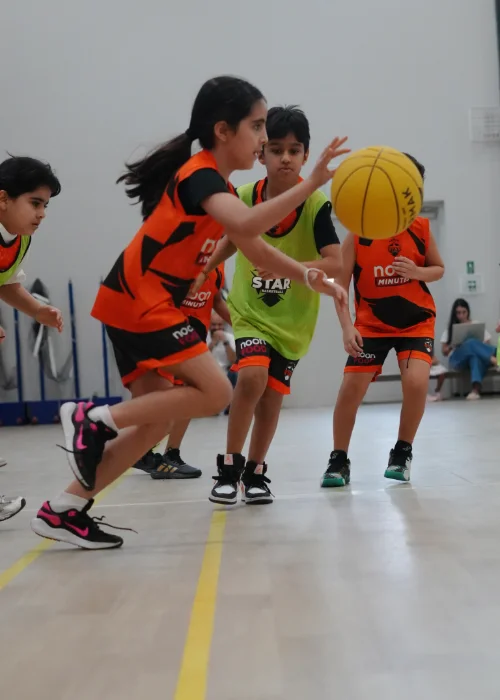
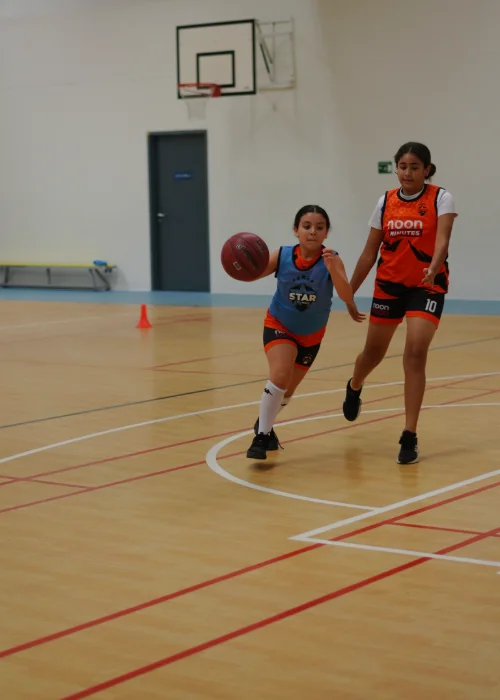
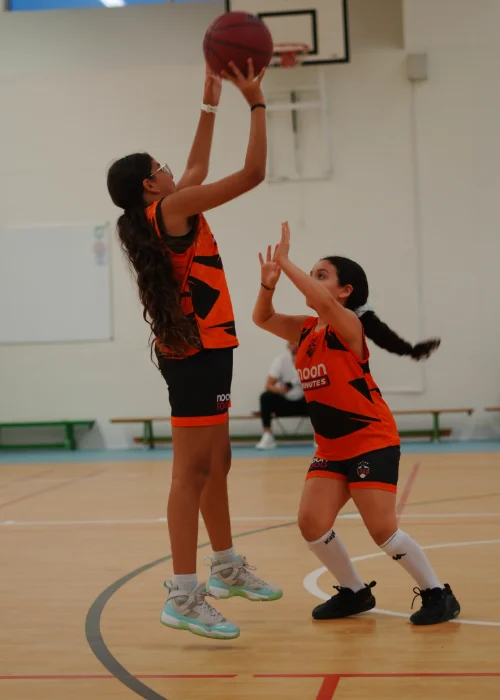
Confidence Becomes Visible Through Action
Confidence is often described as a feeling, but on a basketball court it can be observed through behaviour. A girl asks for the ball. She tries a move under pressure. She gives a teammate useful information. After a mistake, she returns to defence instead of withdrawing.

These moments matter because they show confidence connected to action. The player is not simply saying she believes in herself; she is behaving as though her preparation and contribution have value.
“Confidence you can see” should not be interpreted as a promise that every girl will become outgoing or fearless. Personal development is individual, and basketball cannot guarantee transformation. A quality programme can provide repeated opportunities to build competence, make decisions and belong to a team. Those experiences can create evidence on which confidence grows.
For parents exploring girls’ basketball confidence in Dubai, the most useful question is therefore not “Will this make her confident?” It is “Does this environment help her learn, participate, recover and recognise progress?”
Real Confidence Is Based on Evidence
Encouragement has value, but praise alone can feel fragile. A girl develops more durable belief when she can identify what she has learned and done.
She remembers when dribbling with her non-dominant hand felt impossible and notices that she now uses it in a game. She understands a defensive rotation that once confused her. She enters a new group and earns teammates’ trust through consistent effort.
Each experience provides evidence: practice can change ability, and she can influence what happens next.
Specific feedback helps her recognise this process. “You kept your eyes up and saw the help defender” identifies a repeatable behaviour. “You are amazing” may feel good, but it gives less information about why the action succeeded.
Evidence-based confidence remains useful when a result is disappointing. The player knows that one missed shot does not erase months of progress.
Confidence Is Not the Same as Loudness
Some confident girls speak frequently, volunteer first and express emotion openly. Others are quieter but equally assured. They listen, prepare and act decisively.
Basketball coaches should avoid using one personality as the standard. A player may show growing confidence when she:
- enters training without needing a parent beside her;
- calls a teammate’s name;
- attempts a skill she previously avoided;
- accepts a defensive assignment;
- asks a relevant question;
- takes responsibility for equipment;
- communicates after a mistake; or
- joins a game with less hesitation.
These changes can be subtle. The quiet girl does not need to become the loudest person on court. She needs opportunities to make her contribution clear and increasingly own her experience.
Coaches can invite participation without forcing public performance that creates unnecessary embarrassment.
Skill Development Creates Security
A player feels more capable when she has practical tools. Basketball technique gives her options under pressure.
Ball handling helps her protect possession and move with purpose. Passing allows her to connect with teammates. Shooting gives her a way to finish an advantage. Footwork supports balance, while defensive skills help her respond when the opponent has the ball.
Structured coaching builds these tools step by step. A girl first understands the action, then repeats it, then uses it with movement and opposition. Each stage should be challenging enough to create learning but manageable enough to permit progress.
Confidence grows alongside this process. The player becomes more willing to participate because she has more solutions. Participation then gives her more experience, creating a productive cycle.
Technical teaching should never be replaced by generic confidence exercises. Competence is one of the strongest foundations for sporting belief.
The Right Challenge Builds Courage
If every activity is easy, a girl may look successful without learning how to handle difficulty. If every activity overwhelms her, she may protect herself by avoiding risk.
Good coaching creates an appropriate challenge. Space, time, defender pressure and task complexity can be adjusted. A beginner might dribble into open space before facing a defender. An experienced player may need to use the same skill at game speed with a decision afterward.
The girl experiences uncertainty but retains a realistic path to success. She learns that difficulty is not proof she does not belong. It is information about what she is ready to practise.
Courage appears when she attempts the action despite not controlling the outcome. Coaches can recognise the quality of the decision and effort while remaining honest about execution.
Over time, manageable challenges expand what the player believes she can face.
Mistakes Are Where Confidence Is Tested
Basketball creates frequent errors. A player travels, loses possession, misses a shot or forgets an assignment. Because the game moves quickly, she must decide what the mistake will mean.
An unhealthy environment treats errors as exposure. Players fear criticism and choose the safest possible action. A development environment treats errors as expected evidence. Coaches correct specifically and allow another attempt.
The player can learn a reset process:
1. Recognise what happened without extended self-attack. 2. Use one useful cue. 3. Communicate with teammates. 4. Complete the next responsibility. 5. Review the pattern later when appropriate.
Confidence is visible not because she stops making mistakes, but because mistakes stop removing her from the game.
Teammates contribute by offering information rather than blame. Parents help by keeping individual errors in perspective.
Decision-Making Creates Ownership
A player who waits for the coach to direct every movement may appear organised, but she has limited ownership. Basketball confidence grows when girls are trusted to observe and choose.
Training should include realistic decisions. The ball handler reads a defender. An off-ball player finds space. A defender decides when to help and recover.
Coaches can guide with clear principles and questions rather than supplying every answer. “What did you see?” encourages the player to review her perception. She learns that a decision can be reasonable even when execution is imperfect.
This distinction reduces fear. Girls become more willing to act because they understand the game’s cues and know how to learn from outcomes.
In matches, independent decisions become especially important. Opponents disrupt planned actions, and players must adapt without waiting for permission.
Communication Helps Her Take Space
Basketball gives communication an immediate purpose. A girl calls for a pass, warns about a screen or organises a defensive matchup. Her voice helps the team function.
For a hesitant player, practical communication can be easier than speaking without context. One useful word is a beginning. Repetition makes it more natural.
As confidence develops, she may explain an idea, lead a huddle or encourage a teammate. She also learns to listen and decide which information matters.
Coaches should model respectful clarity. Confidence does not mean shouting over others. The aim is communication that supports action and connection.
A girls-only group can increase the number of visible female voices. Girls see teammates directing play and learn that leadership on the court is normal for them.
Belonging Makes Risk Safer
Players are more willing to attempt difficult things when they trust that one error will not cost them their place in the group.
Belonging develops through names, routines, fair standards and meaningful involvement. Teammates include one another, coaches notice every player and newcomers receive a deliberate welcome.
This security does not eliminate accountability. A girl can be corrected and challenged while knowing she remains valued. The distinction is important: feedback concerns an action, not her right to participate.
Girls-only basketball can create a strong identity. Players see others at different stages and understand that basketball belongs to them. An older player can become a reachable role model; a beginner sees that everyone once had a first session.
Belonging supports confidence because the player no longer spends energy proving she should be there. She can focus on learning.
Team Contribution Makes Confidence Social
Individual mastery builds belief, but basketball also lets girls experience being needed by others.
A player creates space, delivers a pass, secures a rebound or communicates in transition. Teammates depend on her action. This contribution tells her that she is not merely present; she affects the group.
Coaches should recognise more than points. If scoring is the only visible achievement, many valuable actions disappear. Defensive positioning, screens, extra passes and recovery effort all matter.
Seeing different contributions also reduces comparison. Girls can pursue personal development while understanding that team value takes several forms.
Confidence becomes less about proving superiority and more about knowing how to help. That form of belief can remain stable even when another player scores more.
Real Games Provide Strong Evidence
Training creates controlled challenge. Real games add officials, opponents, time, score and emotion. When a girl applies a skill in that environment, the experience can feel especially meaningful.
She may make a pass under pressure, defend a difficult opponent or enter as a substitute and complete her role. The result becomes evidence that training transferred.
Games also reveal vulnerabilities. Nerves may rush technique, or mistakes may affect attention. Coaches can use those observations to shape the next training block.
Competition should be appropriate. A player grows when the challenge stretches her without making meaningful participation impossible. Readiness differs by age and experience.
Star’s approved girls’ basketball positioning includes real, refereed games as part of development when girls are ready. Families should confirm current opportunities for the relevant group.
Physical Confidence Develops Through Movement
Basketball asks girls to run, stop, jump, land, change direction and use space. Age-appropriate training can improve coordination and comfort with these movements.
A girl may become more willing to accelerate, hold a defensive stance or pursue a rebound as she learns to control her body. This is physical confidence grounded in practice.
Coaches should progress movement demands responsibly. Younger players need broad coordination and balance. Older players can develop strength, speed and repeated-effort capacity based on maturity and training history.
Physical development varies, particularly during growth. Temporary changes in coordination should not become a negative label. Girls need support in adapting technique and expectations.
Players should also learn to report pain, hydrate and recover. Responsible body awareness is a form of confidence, not weakness. Medical issues require qualified professional guidance.
Preparation Reduces Avoidable Uncertainty
Confidence does not begin only when the ball is tossed. Routine preparation helps girls enter training and games with fewer unanswered questions.
Players can learn to manage kit, water, footwear, arrival time and warm-up. Older girls can take increasing ownership of schedules and communication.
Coaches support preparation with consistent expectations. A player knows where to go, what to bring and how sessions begin. This predictability leaves more attention available for learning.
Before games, a few clear process goals are more helpful than a flood of instructions. The girl might focus on communication, defensive stance or making the first simple pass.
Preparation cannot control the outcome, but it creates a reliable starting point. The player learns that confidence can come from what she has done, not from waiting for nerves to disappear.
The Coach’s Language Shapes Belief
Coaches influence how girls interpret success and difficulty. Language should connect outcomes to behaviours players can control.
Useful feedback might be:
- “Your balanced stop gave you two options.”
- “You recovered immediately after the turnover.”
- “You communicated early, so your teammate could adjust.”
- “Next time, look before the second dribble.”
These statements explain what happened and what to repeat or change.
Empty praise can become difficult to trust. Harsh personal criticism can make girls avoid risk. Honest, specific feedback offers a stronger middle path.
Coaches should also leave room for self-evaluation. Asking the player what she noticed communicates that her thinking matters.
High standards and confidence-building are not opposites. Girls become more secure when expectations are clear and support helps them meet those expectations.
Parents Can Protect the Confidence-Building Process
Parents are important sources of security. Their response can help basketball remain the daughter’s experience rather than an adult performance project.
Helpful habits include:
- asking what she learned or enjoyed;
- allowing the coach to give technical instruction;
- praising specific preparation and response;
- avoiding comparison with teammates;
- keeping scores and statistics in perspective;
- listening carefully to persistent concerns; and
- letting her take greater responsibility as she grows.
Statements such as “You will definitely be the best” can create pressure despite good intentions. A calmer message is: “Prepare, try and see what you learn.”
After a difficult game, avoid immediate analysis. Give her time and let her decide when to talk. Confidence is easier to rebuild when the parent relationship feels safe regardless of performance.
Progress Is Not Always Linear
A girl may show confidence for weeks and become hesitant after moving groups, facing stronger opposition or experiencing a growth spurt. School pressure and friendship changes can also affect participation.
These variations do not erase progress. Coaches and parents can look for patterns and identify the source of the current challenge.
Sometimes the player needs more repetition. Sometimes a task needs adjustment. Sometimes she needs time to become familiar with a new environment.
Support should not remove every difficult experience. Learning to work through manageable uncertainty is part of development. Persistent distress, unsafe practice or exclusion, however, should not be dismissed as resilience training.
Confidence is dynamic. The long-term goal is a growing ability to use skills and support even when belief temporarily feels less certain.
Different Confidence Milestones Across Ages 4–18
For a young child, confidence may mean entering the court, joining a game and trying again after the ball rolls away. Short activities and immediate success points can help.
Middle age groups may become more aware of comparison. Coaches should give individual feedback, rotate roles and help girls understand that development rates differ.
Teenagers can take ownership of goals, tactical decisions and preparation. They may also experience greater competitive and social pressure, requiring honest communication and perspective.
Experience matters alongside age. A teenage beginner may feel especially visible and needs a respectful entry point. A young advanced player requires challenge without being treated like an adult.
The programme should recognise each stage while preserving the same core message: she is here to learn, contribute and progress.
Confidence Warning Signs in a Programme
Promotional claims about confidence should be evaluated against real behaviour. Families should be cautious when:
- mistakes are punished through humiliation;
- coaches focus only on top scorers;
- girls receive little meaningful participation;
- comparisons are used as motivation;
- players appear afraid to make decisions;
- bullying or exclusion is ignored;
- personal transformation is guaranteed; or
- competition overrides safety and dignity.
Firm standards are not a warning sign by themselves. Girls benefit from clear expectations and honest correction. The issue is whether those methods build understanding and responsibility or depend on fear.
A trial provides an opportunity to see the difference.
What Visible Confidence Looks Like During a Trial
One trial cannot prove long-term outcomes, but parents can observe whether the environment gives confidence room to grow.
Look for:
1. A deliberate welcome for newcomers. 2. Activities with accessible entry points. 3. Frequent player involvement. 4. Specific, respectful feedback. 5. Opportunities to decide, not only follow. 6. Constructive responses to mistakes. 7. Team communication and inclusion. 8. Challenge adjusted for different levels. 9. Clear professional safety standards.
Your daughter may remain nervous during the first session. That is not automatically a poor fit. Ask whether she felt respected, understood the activities and would consider returning.
Confidence can begin as willingness to try a second time.
Girls-Only Basketball for Ages 4–18 in Dubai
Star Sport Academies offers structured girls-only basketball for ages 4–18 in Dubai. Its approved programme combines step-by-step coaching, individual feedback, team play and real games when players are ready.
Families should contact Star directly for current venues, schedules, fees, group availability and trial details. A trial allows a girl to experience the coaching and gives parents a real basis for assessing fit.
The programme can provide opportunities. Coaches can guide and challenge. Teammates can support and depend on her. The player’s confidence then grows through her own experiences within that environment.
Confidence Built Possession by Possession
Visible confidence rarely arrives as one dramatic change. It accumulates.
A girl enters the court. She controls the ball. She communicates. She makes a decision, sometimes correctly and sometimes not. She learns, returns and contributes again.
Over time, these possessions create a story she can believe: she is capable of learning, useful to a team and able to respond when outcomes are imperfect.
That is confidence with substance. It can be seen in how she moves, speaks, decides and recovers—not because basketball promises to change who she is, but because it gives her meaningful opportunities to discover what she can do.
Book a Girls’ Basketball Trial in Dubai
Give your daughter a court where skills, contribution and confidence can grow together. Contact Star Sport Academies for current details and request a girls’ basketball trial for ages 4–18 in Dubai.
Explore the Girls’ Basketball programme, check the basketball locations and timetable, or book a girls’ basketball trial.
Current Supplied Venues
Basketball network
- Al Barsha
- RIT–DSO
- Ashmount School
- Jumeirah–JBS
- Mirdif Uptown School
- Al Khaleej Al Warqa
- South School
- Sharjah
- Al Qusais
Please note: These locations belong to Star’s wider basketball network. Contact Star to confirm which venues currently host girls-only basketball groups, age groups and trial sessions.
Frequently Asked Questions
Can basketball help a shy girl become more confident?
Basketball can provide gradual opportunities to communicate, decide and contribute. Outcomes differ, so coaches and parents should support her individual pace rather than promise an instant personality change.
How does skill development support confidence?
Reliable skills give a player practical options. When she sees that practice improves what she can do, confidence becomes connected to evidence.
Is confidence only visible through scoring?
No. It can appear through communication, defence, decision-making, preparation, leadership, willingness to try and recovery after mistakes.
Does Star offer girls-only basketball?
Yes. The approved programme serves girls aged 4–18 in Dubai through girls-only groups, subject to current scheduling and availability.
Do real games help confidence?
Appropriate games let girls apply training under pressure and collect meaningful experiences. Challenge should match readiness, and outcomes should be reviewed constructively.
How can parents avoid adding pressure?
Value learning and preparation, avoid comparisons and sideline coaching, allow emotion to settle after games and keep support independent of results.
What should we assess during a trial?
Look at the welcome, coaching feedback, player involvement, treatment of mistakes, level of challenge, team culture and professional safety standards.