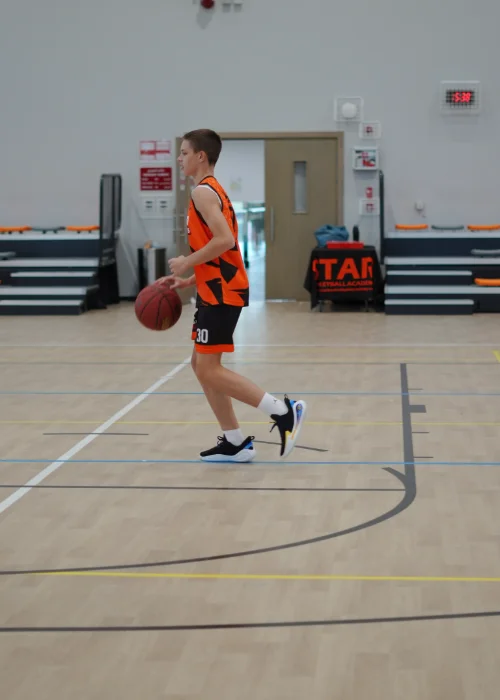
Training Only Counts When Learning Reaches the Game
A player can look comfortable during a drill and still struggle when a defender arrives. A shot may feel smooth in an empty gym but change when the score is close. A handling move may disappear when the player has to scan, protect the ball and find a teammate at the same time.

This does not mean the drill failed. It means transfer is the next stage.
Competitive basketball training in Dubai or Sharjah should help children move from controlled repetition to real performance. Players need technique, but they also need decisions, pressure and game experience.
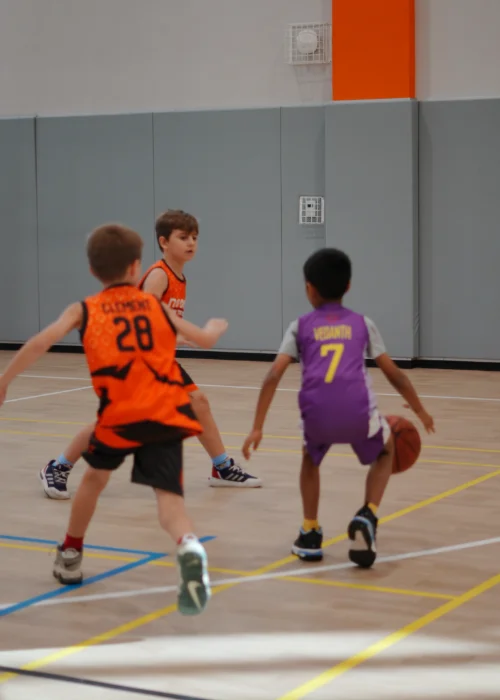
At Star Basketball Academy, real, refereed games form part of the development approach for boys and girls aged 4 to 18. Coaches can observe how skills appear under pressure and use those lessons to shape future training.
Game day is not separate from development. It is where players discover which habits are becoming reliable.
What Is Skill Transfer in Basketball?
Skill transfer is the ability to use something learned in training during a real basketball situation.
A player may practise a jump stop, then use it to stay balanced after driving into the lane. A passing drill may transfer when the athlete sees defensive help and finds an open teammate.
Transfer requires recognition. The player must notice that the game situation matches the problem practised.
It also requires execution under different conditions. Time, space, fatigue, opponents and emotion influence performance.
Training should therefore progress from simple control towards realistic information. The goal is not perfection in one drill. It is adaptable skill.
Why Some Skills Disappear Under Pressure
Pressure changes attention and timing.
A defender reduces space. The player may look down at the ball and stop seeing teammates. An athlete who fears making a mistake may rush or avoid involvement.
Technical habits that are not yet stable can break down at speed. Decision-making also becomes harder when several options appear.
This is normal. Coaches should identify the reason rather than telling a child simply to “do it like training.”
The next session may reduce pressure, focus attention on one cue and then rebuild the situation.
Game-day difficulty provides information. It is not proof that the player lacks ability.
Build Technique Before Adding Complexity
Players need a foundation.
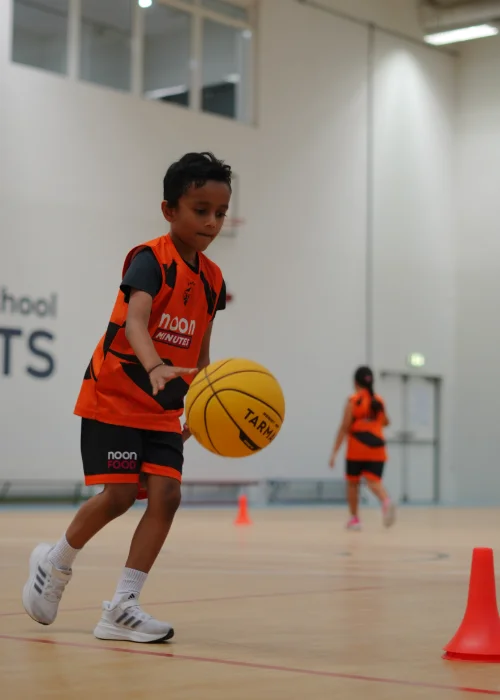
Early handling work develops control and balance. Passing practice helps accuracy and timing. Shooting repetition establishes footwork and release.
Without enough familiarity, a player has little attention left for decisions.
However, unopposed repetition should not continue forever. Once the movement becomes stable, training can introduce direction, time and defenders.
The progression should suit the player. Adding maximum pressure too quickly creates survival rather than learning.
Technique and game play are not competing methods. Each stage prepares the next.
Add Decisions to Every Major Skill
Basketball is not a fixed sequence. Players choose based on what the defence gives them.
A handling activity may include two possible gates, with a defender closing one. A shooting task may require the player to read whether to shoot, drive or pass. A rebounding game may connect the defensive board to an outlet and transition.
The decision makes the technical action meaningful.
Coaches can ask what the player saw. A correct idea with imperfect execution needs different feedback from a poor choice completed successfully by chance.
Over time, players learn to connect information, decision and skill.
Train at Game-Relevant Speed
Not every repetition should be maximal. Players often need slower practice to understand a movement.
Game-day transfer does require gradual exposure to realistic pace. Footwork, control and vision must survive when actions happen quickly.
Coaches can increase speed after quality appears. They should distinguish purposeful intensity from rushing.
A player who moves fast without balance may reinforce poor habits. A player who remains comfortable forever may not prepare for competition.
The right speed challenges execution while preserving the learning objective.
Small-Sided Games Create Frequent Transfer Opportunities
In full games, some children receive limited involvement. Small-sided formats increase touches and decisions.
Two-on-two and three-on-three games expose spacing, support and defensive responsibility. Every player attacks and defends repeatedly.
Coaches can emphasise a game-day problem without removing choice. A numerical advantage can develop decisions against defensive help. A transition game can rehearse quick organisation.
The environment remains competitive and unpredictable.
Small-sided games create a bridge between a drill and a full fixture.
Real Refereed Games Add Unique Pressure
Training games are valuable, but organised fixtures add officials, a clock, opponents and an authentic result.
Players must understand rules, manage fouls and respond when play stops. They experience substitutions and team roles.
Emotion becomes stronger. Children care about the outcome and must make decisions while excited or disappointed.
These experiences cannot be fully simulated. They help players mature when adults keep the environment appropriate.
The referee should be treated with respect. Learning to respond to a decision and continue playing is part of game-day development.
Shooting Skills That Transfer
Game shooting differs from stationary repetition.
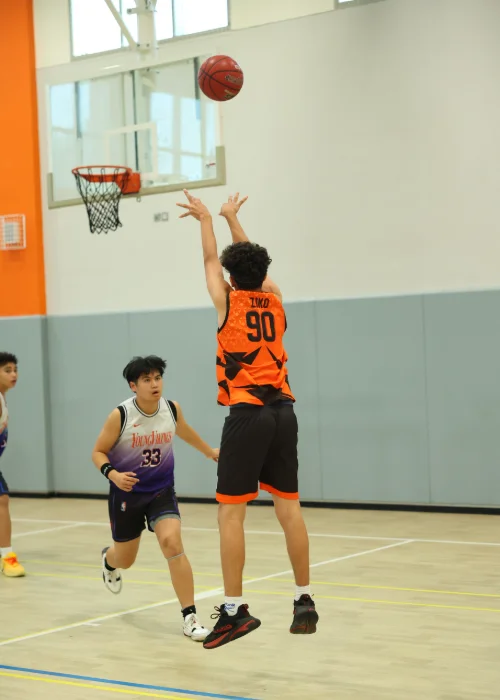
Players need footwork after movement, balance under time pressure and an understanding of shot selection. A defender changes the release window.
Training can begin with form and gradually add catches, dribbles, closeouts and choices. Players should practise realistic distances suitable for age and ability.
Coaches should not judge only makes and misses. Balance, preparation and decision quality provide better evidence of long-term progress.
On game day, a player who takes a balanced open shot may be applying training even when the ball does not enter.
Ball-Handling Skills That Transfer
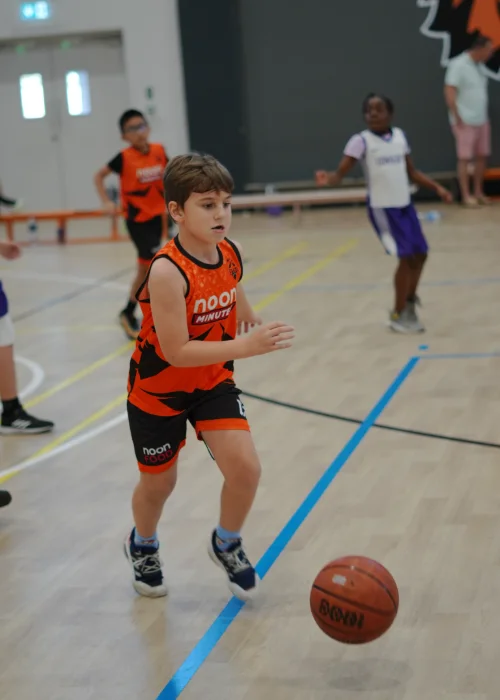
Game-ready handling allows the player to control the ball while seeing the court.
Players need both hands, changes of pace and protection. They also need to know when not to dribble.
Training can add defenders, sideline space and passing options. The athlete learns that a move should create an advantage.
Game-day progress may appear as fewer unnecessary dribbles, better control against pressure or an earlier pass.
Flashy combinations matter less than purposeful possession.
Passing Skills That Transfer
Real passing involves moving teammates and defenders.
Players need to recognise windows, choose the right type of pass and deliver at a useful time. The receiver’s next action matters.
Training should include movement and pressure. Passing in lines provides repetition but limited perception.
Small games teach players to create angles and move after releasing the ball.
On game day, a simple accurate pass that maintains an advantage may show more development than a risky highlight attempt.
Defensive Skills That Show in Games
Defensive progress is sometimes less visible than scoring.
A player may contain the ball, position correctly, communicate or help a teammate without recording a steal.
Training should develop stance, footwork and awareness. Live situations teach players to react without reaching unnecessarily.
Team defence requires trust. Players need to understand when to help and recover.
Game-day evaluation should recognise these habits. Rewarding only steals can encourage gambling and poor position.
Movement Without the Ball
Most players spend more game time without possession than with it.
Training should teach spacing, cutting, screening and relocation. Defensively, players track opponents and protect important areas.
Small-sided games make off-ball contribution easier to observe.
On game day, a player may create a teammate’s score through movement without touching the ball. Coaches should make that contribution visible.
Understanding off-ball play is a sign that the child’s game is becoming more complete.
Performance Under Fatigue
Fatigue can affect balance, vision and decisions.
Older or more advanced players need appropriate opportunities to execute late in demanding activities. Conditioning can be integrated into basketball rather than used only as separate running.
Coaches should consider age, development and safe workload. Young children do not need adult conditioning models.
The objective is to maintain useful habits, not prove toughness through exhaustion.
Hydration, recovery and sleep support performance, particularly within busy UAE school schedules.
Confidence Under Game Pressure
Confidence develops when players experience pressure and discover they can respond.
A child may initially hesitate to shoot or handle against a strong defender. Suitable opportunities and constructive feedback reduce fear.
Coaches can praise appropriate decisions even when execution fails. This encourages players to continue applying learning.
Confidence should not depend on scoring. Defence, passing and communication provide evidence too.
Parents help by avoiding criticism immediately after games and by asking what the child tried.
How Coaches Review Game Performance
A coach looks for patterns, not only highlights.
Did players use spacing? Did handling remain controlled? How did the team react after losing possession? Which decisions repeatedly caused difficulty?
Individual review considers the player’s current target. A low-scoring game may still show major progress.
Feedback should identify something successful and a manageable next step. Long emotional lectures after a match are rarely effective.
Game observations should return to future practice. Review creates purpose when it changes training.
Using Results Without Letting Results Control Development
The score is real and children should be allowed to care about it.
Winning teaches some lessons; losing teaches others. Neither result proves the entire quality of performance.
A youth team can win while using poor habits. It can lose while applying new ideas against stronger opposition.
Coaches should expect competitive effort and evaluate decisions, execution, teamwork and response.
Parents can praise commitment and respect the opposition. A healthy competitive culture prepares players to handle results without being defined by them.
The Parent’s Game-Day Role
Children need encouragement, not several coaches.
Avoid calling “shoot,” “pass” or “dribble” during every possession. The player must read the situation and may receive conflicting information.
Support the team and respect officials. Do not discuss another child’s mistakes.
After the game, allow emotion to settle. Ask what the player enjoyed, learned or wants to try again.
If there is a coaching concern, use the academy’s communication process at an appropriate time.
Signs That Training Is Reaching the Game
Parents may notice the player:
- Handles the ball with the head higher.
- Stops under balance before deciding.
- Uses both hands when the situation requires.
- Moves after passing.
- Takes more suitable shots.
- Communicates defensively.
- Recovers faster after mistakes.
- Recognises space and teammates earlier.
These habits may appear inconsistently before they become reliable.
Progress should be reviewed across several games, not one result.
Questions to Ask About Competitive Basketball
Families can ask:
- How do games connect to training objectives?
- Are fixtures suitable for the group’s level?
- How are players prepared for rules and officials?
- What playing opportunities currently exist?
- How does the coach review performance?
- What behaviours indicate readiness for stronger competition?
- What commitment do teams require?
Current league and schedule information should be verified directly before publication or registration.
Choosing a Game-Connected Basketball Academy
During a trial, look for a progression from technique to decisions. Ask whether players receive real game opportunities and how coaches use them.
Observe culture. Are mistakes treated as learning? Do coaches remain constructive during competition?
Confirm the age group, venue and pathway. A practical schedule supports attendance at training and games.
Avoid programmes that promise guaranteed elite outcomes. The academy should provide appropriate development and honest opportunities.
From Practice Habit to Game-Day Skill
Players do not rise magically to a new level when the whistle begins. They rely on habits built through training.
Purposeful drills establish technique. Pressure and small-sided games develop decisions. Real fixtures test everything and reveal the next priority.
Star Basketball Academy gives boys and girls aged 4 to 18 across Dubai and Sharjah opportunities to connect structured training with real, refereed games.
The objective is progress that parents and players can recognise where basketball matters most: on the court, in the game, under real pressure.
Book a Game-Ready Basketball Trial
Book a trial with Star Basketball Academy to experience training that connects skills to decisions and real game performance. Confirm current venues, age groups and competition opportunities directly.
For current programme information, visit Star Basketball Academy, check the basketball locations and timetable, or book a basketball trial.
Current Supplied Venues
Basketball
- Al Barsha
- RIT–DSO
- Ashmount School
- Jumeirah–JBS
- Mirdif Uptown School
- Al Khaleej Al Warqa
- South School
- Sharjah
- Al Qusais
Please note: Venue schedules and age-group availability can change. Contact Star Basketball Academy to confirm the exact venue name, current group and trial time.
Frequently Asked Questions
Why do basketball skills disappear during games?
Defenders, speed, fatigue and emotion add pressure. Training should introduce these demands progressively so skills become adaptable.
Are drills still important?
Yes. Drills provide focused repetition, but they should progress towards decisions and realistic game situations.
How do real games help young players improve?
Games reveal which habits transfer under genuine pressure. Coaches can use those observations to plan future training.
Should parents judge progress by points scored?
No. Passing, defence, spacing, decisions, communication and response to mistakes are important evidence too.
Does Star Basketball Academy offer refereed games?
The approved campaign information describes real, refereed games as part of development. Confirm current opportunities for the relevant group.
What age groups does Star Basketball Academy serve?
The campaign brief covers boys and girls aged 4 to 18 across Dubai and Sharjah.
How can parents help on game day?
Encourage the team, avoid tactical instructions, respect officials and discuss learning after emotions settle.