Basketball Dribbling Drills for Beginners
Dribbling is the foundation of basketball — the first skill every young player needs and one of the most fun to practise. A child who can dribble confidently with both hands can move, create space and play with freedom, while a child who struggles with the ball quickly becomes frustrated. The wonderful news is that dribbling improves enormously with simple, regular practice, and most of these drills need nothing more than a ball and a little space. Here are the best basketball dribbling drills for beginners, designed to build control, confidence and both hands — perfect for practising at home between sessions.

Before you start, a few golden rules. Encourage your child to use their fingertips, not their palm, to control the ball; to keep their head up rather than staring at the ball; and to practise with both hands from the very beginning. Keep sessions short, fun and full of encouragement — a few happy minutes most days beats a long, frustrating session. Pair this home practice with proper coaching at Star Basketball Academy and your child’s dribbling will come on in leaps and bounds.
Drill 1: Stationary dribbling
The perfect starting point. Your child stands still and dribbles the ball with one hand, focusing on a steady, controlled bounce using the fingertips. Start with the strong hand, then switch to the weaker hand. The aim is a consistent, comfortable rhythm. Once they’ve got the hang of it, challenge them to do it without looking at the ball — a key habit for real games.
Drill 2: High and low dribbles
Dribbling at different heights builds control. Have your child dribble high (around waist height), then low (closer to the floor), and back again. Low dribbles especially develop fine control and protect the ball from opponents in games. Switch hands and repeat. Children enjoy the challenge of keeping the low dribble quick and controlled.
Drill 3: Crossover dribble
The crossover — bouncing the ball from one hand to the other in front of the body — is an exciting and essential skill. Start slowly, with your child pushing the ball across to the other hand and catching the rhythm. As they improve, they can speed it up. The crossover builds the ability to change direction and is a real confidence-booster, since it feels like a “proper” basketball move.
Drill 4: Figure eight
For a fun coordination challenge, have your child weave the ball in a figure-eight pattern around and between their legs (walking pace to start). This builds soft hands, control and confidence with the ball in tight spaces. It looks impressive too, which children love, and it’s a brilliant way to develop a feel for the ball with both hands.
Drill 5: Dribble walking and jogging
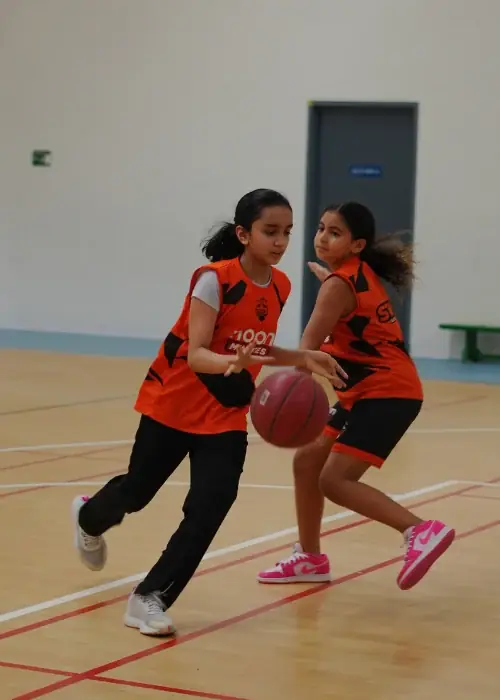
Real basketball is played on the move, so it’s important to dribble while travelling. Have your child dribble as they walk across the room or garden, then progress to a gentle jog, keeping the ball under control. Encourage them to keep their head up and use both hands. This bridges the gap between standing still and game play, and it’s a great one to turn into a fun challenge or race.
Drill 6: Cone (or obstacle) weave
Set up a line of cones, shoes or water bottles and have your child dribble in and out of them, changing hands as they weave. This develops control, changes of direction and the all-important habit of keeping the head up to “see” the obstacles. Time them and let them try to beat their record — it turns practice into an exciting game.
Drill 7: Two-ball dribbling (advanced fun)
Once your child is comfortable, dribbling two balls at once — one in each hand — is a brilliant challenge that rapidly develops both hands and coordination. Start with both balls bouncing together, then try alternating. It’s tricky and great fun, and even a short go at it pays big dividends for ball control. Don’t worry if it takes time; the effort itself builds skill.
Making dribbling practice effective and fun
A few simple principles turn these drills into real progress. Keep it short and frequent — ten focused minutes most days beats an occasional long slog. Always practise both hands, as developing the weaker hand early is one of the best investments a young player can make. Encourage head-up dribbling so skills transfer to real games. And above all, make it a game — count dribbles, beat records, set little challenges. Children practise far longer and improve far faster when they’re enjoying themselves, so celebrate effort and keep the mood light and positive.
Why dribbling matters so much
Dribbling is the gateway to everything else in basketball. A confident dribbler can move freely, escape pressure, create chances and play without fear — while a hesitant one is limited and easily frustrated. By helping your child build solid dribbling foundations early, you’re giving them the freedom and confidence to enjoy the whole game. And because dribbling improves so visibly with practice, it’s wonderfully motivating: children can see and feel themselves getting better, which fuels their love of the sport.
A simple weekly dribbling routine
If you’d like a little structure, here’s an easy, low-pressure way to spread these drills across a week. The secret is little and often — short, enjoyable bursts that fit naturally around your child’s day. On a couple of days, focus on the basics: stationary dribbling and high-and-low dribbles with both hands, just building a steady, confident rhythm. On another day or two, work on moves like the crossover and the figure eight, taken slowly at first and sped up as confidence grows. Add a day of dribbling on the move — walking and jogging while controlling the ball, then weaving through cones — to bridge towards real game play. And whenever there’s a spare few minutes, let your child simply play and experiment with the ball, trying the two-ball challenge or inventing their own moves. Across a week, that’s more than enough to drive real improvement, and because each session is short and fun, your child will want to keep going rather than burn out. If they’re not in the mood one day, leave it — forced practice does more harm than good, and the goal is a lasting love of the ball.
How you can help as a parent
You don’t need to be a basketball expert to support your child’s dribbling practice — your encouragement matters far more than your knowledge. Keep a ball easily accessible at home so your child can have a dribble whenever the mood takes them. Join in occasionally, even just by counting their dribbles or timing their cone weave, which turns practice into shared fun. Praise effort and the little breakthroughs — a smoother crossover, a few dribbles with the weaker hand — rather than focusing on mistakes. And resist comparing your child to others; every child develops at their own pace, and confidence grows best in a warm, supportive environment. Done this way, dribbling practice becomes part of the joy of childhood, and the skills follow naturally.
Frequently asked questions
How often should my child practise dribbling? A few short sessions a week is plenty for most beginners. Quality and enjoyment matter far more than quantity — ten happy minutes most days works wonders.
Do I need a basketball court at home? Not at all. Most of these drills need only a ball and a small flat space. A driveway, garden or even a quiet indoor area works fine for basic dribbling.
Why does practising both hands matter so much? Being able to dribble with either hand makes a player far harder to stop and far more confident. Developing the weaker hand early is one of the best long-term investments a young player can make.
My child gets frustrated — what should I do? Keep sessions short, make them game-like, and celebrate effort over perfection. Stop before frustration sets in, and never pressure them. The aim is for your child to enjoy the ball and grow in confidence.
How Star Basketball Academy builds skills
At Star Basketball Academy, our coaches build your child’s dribbling and all-round skills properly from the ground up, in fun, well-structured sessions across our Dubai locations. We group children by age and ability, teach correct technique through enjoyable drills and games, and give the encouragement that makes home practice truly pay off — developing confident, skilful young players who love the game.
Most of all, remember that every great dribbler started exactly where your child is now — with wobbly, uncertain bounces that grew, through patient and playful practice, into smooth, confident control. Trust the process, keep it fun, and enjoy watching your child blossom.
Keep the momentum going
Home dribbling practice plus expert coaching is the winning formula for a young basketball player, combining the freedom of independent play with the guidance only a great coach can provide.
Register at Star Basketball Academy, find your nearest location, or contact us to get your child started.