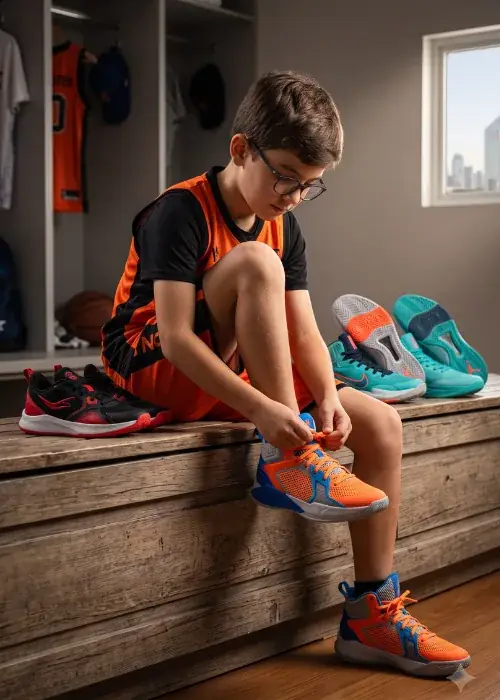
Basketball Rules Explained for Parents and Beginners
If your child has taken up basketball and you’re not quite sure how the game works, you’re in good company — plenty of parents find themselves cheering along without fully understanding the rules. The good news is that basketball’s basics are simple to grasp, and once you know them, watching and supporting your child becomes far more enjoyable. This friendly guide explains the basic rules of basketball in plain English — scoring, fouls, travelling, dribbling and more — so both parents and young beginners can follow and love the game.

The aim of the game
Basketball’s objective is beautifully simple: score more points than the other team by getting the ball through the opponent’s hoop (the basket), while stopping them from scoring in yours. Two teams take turns attacking and defending, moving the ball up and down the court. The team with the most points when time runs out wins. Everything else — the various rules — simply governs how players are allowed to move the ball and compete fairly. Keep that core aim in mind and the rest falls into place.
Scoring: how points are won
Points are scored by putting the ball through the hoop, and different shots are worth different amounts. A regular basket (a “field goal”) is worth two points. A shot made from beyond the three-point line, further from the basket, is worth three points. And a free throw — an unguarded shot awarded after certain fouls — is worth one point. So when you watch a game, a successful shot adds two or three points, and free throws add one each. Understanding this helps you follow the score and appreciate the bigger, longer-range shots.
Dribbling and moving with the ball
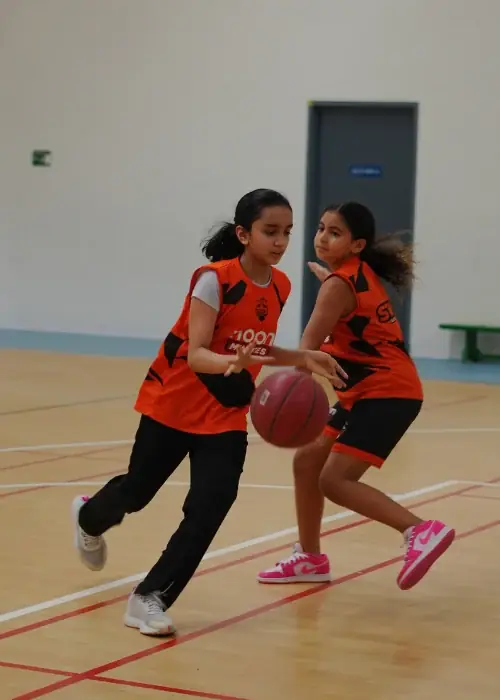
One of the most important rules concerns how players move with the ball. A player can’t simply run while holding it — they must dribble (bounce the ball continuously with one hand) to move around the court. If a player stops dribbling and holds the ball, they can’t start dribbling again (that’s a “double dribble”), and they can’t take more than the allowed steps without dribbling. This is why dribbling is such a fundamental skill, and why so much youth practice focuses on it. Once you know this rule, much of what’s happening on court makes sense.
Travelling
Closely related is the “travelling” rule. Travelling means taking too many steps without dribbling the ball — essentially moving your feet illegally while holding it. Players are allowed to take a couple of steps (for example, when coming to a stop or making a layup), but beyond that it’s a travel, and the ball is awarded to the other team. Travelling is one of the most common rules beginners breach, which is why coaches work hard on proper footwork. Don’t worry if your child travels a lot at first — it’s a normal part of learning.
Fouls
A foul is illegal physical contact, such as pushing, holding, tripping or hitting an opponent. Basketball is meant to be a largely non-contact, skill-based game, so fouls are penalised. Depending on the situation, a foul can result in the other team getting the ball back or being awarded free throws. If a player commits too many fouls, they may be removed from the game. For young players, the key lessons are to play fairly, avoid unnecessary contact, and defend with good footwork rather than their hands. Coaches teach this carefully, and it keeps the game safe and enjoyable.
Other common rules to know
A few more rules round out the basics. Out of bounds: if the ball goes outside the court lines, it’s given to the other team. Shot clock / time rules: at higher levels, teams have a limited time to attempt a shot, keeping the game flowing (though this is often relaxed for young children). Backcourt: once a team brings the ball over the halfway line, they generally can’t take it back. These finer rules matter more as players advance, so beginners needn’t worry too much about them at first — the basics above are more than enough to follow and enjoy a youth game.
Don’t worry about every detail
If all this feels like a lot, relax — you really don’t need to master every rule to enjoy your child’s basketball. At youth level, especially for beginners, many rules are relaxed or simplified, and the focus is firmly on learning, fun and development rather than strict officiating. As your child progresses, you’ll both pick up the finer points naturally. For now, knowing the aim of the game, how scoring works, and the basics of dribbling, travelling and fouls is plenty to follow along and cheer your child on with confidence.
Why understanding the rules helps
Taking a little time to learn the rules pays off in several ways. You’ll enjoy watching far more when you understand what’s happening, you’ll be able to share in your child’s experience and chat about their games, and you’ll avoid the frustration of feeling lost on the sidelines. Your child will also appreciate your interest and support. Best of all, a shared understanding of the game becomes a lovely bond between you and your young player — something to talk about, celebrate and enjoy together as they grow in the sport.
A quick glossary of basketball terms
To help you follow the action and your child’s chatter about their games, here are some common basketball terms explained simply. A field goal is any basket scored during normal play (worth two or three points). A free throw is an unguarded shot from the free-throw line, awarded after certain fouls and worth one point. A rebound is when a player gains possession of the ball after a missed shot. An assist is a pass that directly leads to a teammate scoring. A layup is a close-range shot, usually after driving to the basket. A turnover is when a team loses possession through a mistake, such as a bad pass or a travel. A screen (or “pick”) is when a player legally blocks a defender to free up a teammate. And the key (or “paint”) is the painted area near the basket. You certainly don’t need to memorise these, but having them to hand makes watching games and talking with your child even more enjoyable, and you’ll find you pick them up naturally over time.
Helping your child learn the rules
Children absorb the rules of basketball best the same way they learn the skills — gradually, through playing and good coaching, rather than through lectures. You don’t need to drill rules into your child at home; their coaches will introduce them naturally and patiently as part of fun sessions and games. What you can do is keep things positive when your child makes a rule-related mistake, like travelling or double-dribbling, reassuring them that it’s a completely normal part of learning that every player goes through. You might also enjoy watching a little basketball together, gently pointing out things you now recognise — a three-pointer, a free throw, a good rebound. This shared learning turns the rules into something fun you explore together, deepening your child’s understanding and your bond over the game. Above all, keep the focus on enjoyment; the rules will come, and a child who loves playing will learn them effortlessly along the way.
Frequently asked questions
What are the basic rules of basketball? Score by putting the ball through the hoop (two or three points, or one for a free throw), move the ball by dribbling, avoid travelling (too many steps without dribbling), and don’t foul (illegal contact). That’s the heart of it.
What is travelling? Taking too many steps without dribbling the ball. Players may take a couple of steps when stopping or making a layup, but beyond that the ball goes to the other team. It’s a very common beginner mistake and nothing to worry about.
How does scoring work? A normal basket is worth two points, a shot from beyond the three-point line is worth three, and a free throw is worth one. The team with the most points when time runs out wins.
Do I need to know all the rules to support my child? Not at all. The basics in this guide are plenty to follow and enjoy youth games. At beginner level many rules are simplified, and you’ll both pick up the finer points naturally over time.
How Star Basketball Academy teaches the game
At Star Basketball Academy, our coaches teach young players the rules, skills and spirit of basketball in a fun, supportive environment across our Dubai locations. We introduce the game gently and clearly, grouping children by age and ability, so every child understands how to play, develops proper skills, and enjoys the sport. We’re always happy to help parents understand the game too, so you can support your child with confidence.
Enjoy the game together
With the basics under your belt, you’re all set to follow, understand and love watching your child play basketball.
Register at Star Basketball Academy, find your nearest location, or contact us to get your child started.