Basketball Positions Explained for Young Players
If your child is getting into basketball, you’ll quickly hear about positions — point guard, centre, forwards and more. Understanding what each position does helps you follow the game, support your child, and appreciate where their strengths might fit. The reassuring thing for young players is that, especially at a developing age, children should learn a bit of everything rather than being pinned to one role too early. Still, knowing the five positions and what they involve is genuinely useful. This guide explains each basketball position in simple terms, what makes a player suited to it, and why versatility matters most for young players.

The five basketball positions
Traditional basketball has five positions, each with its own typical role on the court. They’re often given numbers 1 to 5: the point guard (1), shooting guard (2), small forward (3), power forward (4) and centre (5). Two are “guards”, two are “forwards”, and one is the centre. Don’t worry if that sounds like a lot — by the end of this guide it’ll all make sense, and on the court these roles blend together far more than the labels suggest. Let’s look at each in turn.
1. Point guard — the playmaker
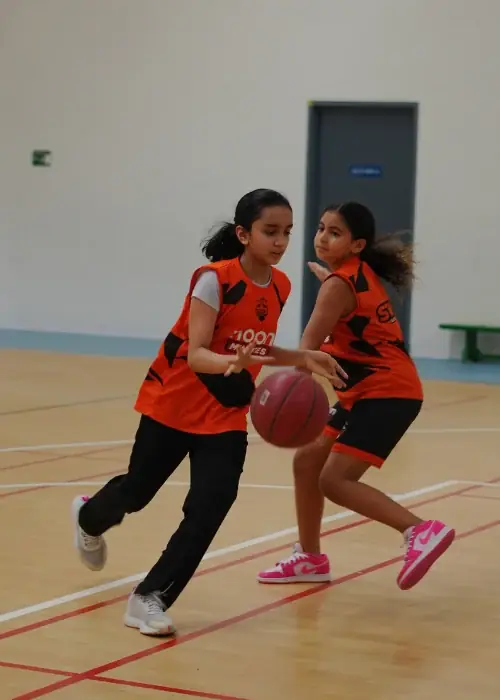
The point guard is often described as the team’s leader or “quarterback” on the court. Usually a skilful dribbler and passer, the point guard brings the ball up the court, directs the team’s attack, and looks to set up teammates with good passes. Point guards tend to have excellent ball control, good vision to spot opportunities, and a calm head under pressure. They’re often (though not always) among the smaller, quicker players. For a child, playing point guard develops wonderful all-round skills — dribbling, passing, decision-making and leadership — which is why these are such valuable abilities to build whatever position they eventually favour.
2. Shooting guard — the scorer
The shooting guard, as the name suggests, is typically one of the team’s best shooters and scorers. They’re often quick and agile, skilled at getting free to receive the ball and shoot, including from longer range. A good shooting guard combines accurate shooting with the ability to move cleverly without the ball and drive towards the basket. For young players, the shooting guard role encourages the development of shooting technique, agility and off-the-ball movement — and there are few things more thrilling for a child than seeing their shot go in.
3. Small forward — the all-rounder
The small forward is one of the most versatile positions on the court, blending the skills of guards and bigger players. A good small forward can score, defend, dribble and rebound — a true jack-of-all-trades. They need to be adaptable and well-rounded, comfortable doing a bit of everything as the game demands. For children, this versatility is exactly what good development is all about, which is why encouraging broad skills early helps a young player thrive in this kind of flexible role.
4. Power forward — strong and versatile
The power forward traditionally plays closer to the basket and combines strength with skill. They’re often involved in rebounding (winning the ball when shots miss), scoring near the basket, and defending. Modern power forwards are increasingly versatile, sometimes stepping out to shoot from distance too. The role rewards a combination of physical presence, good positioning and solid all-round skills. For young players, it’s worth remembering that children grow and change a great deal, so a child shouldn’t be limited to a “big player” role just because of their current size.
5. Centre — the anchor
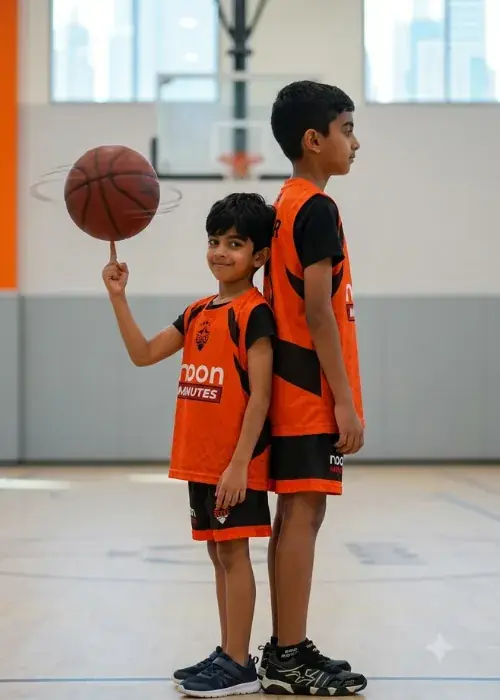
The centre is traditionally the tallest player, operating closest to the basket at both ends. On attack, centres score from close range and grab rebounds; on defence, they protect the basket, block shots and dominate the area near the hoop. Centres need good positioning, strength and timing. But here’s the important point for parents: at young ages, children are still growing, and today’s tallest child may not be tomorrow’s, so it’s far better to develop well-rounded skills than to typecast a child as a centre early on.
Why versatility matters most for young players
Here’s the single most important message of this guide: young players should learn all the positions and develop all-round skills, rather than specialising too early. Children develop at different rates and change enormously as they grow, so a child who’s tall at eight might be average at fourteen, and vice versa. More importantly, learning to dribble, pass, shoot, defend and rebound makes a child a better, more complete and more adaptable player — and keeps the game fun and varied. Good youth coaching rotates children through different roles and focuses on building broad skills, allowing each child’s natural strengths and preferences to emerge over time. So if your child says “I’m a centre” or “I’m a point guard”, that’s lovely — but gently encourage them to enjoy and practise everything.
Which position might suit my child?
While versatility comes first, it’s natural to wonder where your child might thrive. A child who loves dribbling and organising play might enjoy guard roles; one with a great shot may gravitate to shooting guard; an all-rounder may relish small forward; and a child who enjoys the physical, close-to-the-basket battle may like forward or centre play. But these are tendencies, not labels — the best approach is to let your child experience every position, develop fully, and discover for themselves what they love. Their preferences and strengths will become clear with time, and a good coach will help guide them. You can read more about developing well-rounded ability in our guide to basketball at Star Basketball Academy.
How positions develop as children grow
It’s worth understanding that positional play becomes more defined as players get older and more advanced. In the early years, the focus is rightly on fundamentals and fun, with children playing all over the court. As they mature, grow and refine their skills, more specific positional roles naturally emerge, shaped by each player’s physical development, strengths and preferences. This is exactly why rushing a child into a fixed position is unwise — there’s plenty of time for specialisation later, and the broad foundation built in childhood is what allows a player to excel in whatever role suits them best in the end.
A quick word on modern basketball
It’s worth knowing that the game has evolved, and the old, rigid idea of positions is far more fluid today. At the top level, the most prized players are versatile ones who can handle the ball, shoot, defend and rebound regardless of their nominal position. Big players now shoot from distance; guards crash the boards; everyone is expected to do a bit of everything. This modern, position-less trend is wonderful news for young players, because it reinforces exactly what good youth coaching has always said: develop every skill, stay adaptable, and don’t pigeonhole yourself too soon. The more complete a player your child becomes, the more valuable and effective they’ll be — and the more fun they’ll have playing every part of the game.
Frequently asked questions
Should my child pick one position? Not at a young age. It’s far better for children to learn all positions and develop broad skills. Specialisation can come later, once they’ve grown and their strengths have emerged.
My child is tall — should they be a centre? Not necessarily. Children grow at different rates, and today’s tallest child may be average later. Encourage well-rounded skills rather than fixing them in one role based on current height.
What’s the most important position? Every position matters, and a team needs them all working together. Rather than chasing a “best” position, focus on your child becoming a complete, adaptable player who enjoys the whole game.
How will my child find their position? By playing, experimenting and developing. Over time, with good coaching, each child’s natural strengths and preferences emerge, and the right roles become clear. There’s no rush.
How Star Basketball Academy develops young players
At Star Basketball Academy, our coaches develop well-rounded young players, teaching all the core skills and letting children experience different positions in a fun, supportive environment across our Dubai locations. We group children by age and ability, focus on fundamentals and enjoyment, and help each child’s natural strengths emerge over time — so they grow into confident, complete and adaptable players who love the game.
So as you watch your child play, enjoy spotting the different roles in action, but hold the labels lightly. The young player who learns to do everything — dribble, pass, shoot, defend and rebound — is the one who will grow into the most capable and confident athlete, ready to shine wherever the game needs them.
Help your child enjoy the whole game
Understanding positions helps you follow and support your child’s basketball journey — but the real key at a young age is broad skills, versatility and fun. Give your child the chance to learn it all with great coaching.
Register at Star Basketball Academy, find your nearest location, or contact us to get your child started.